 By admin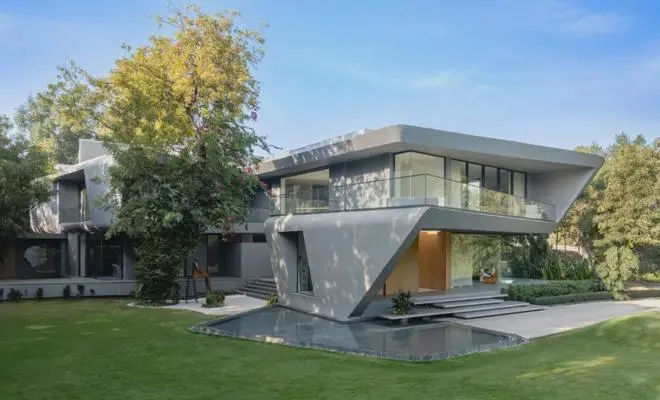
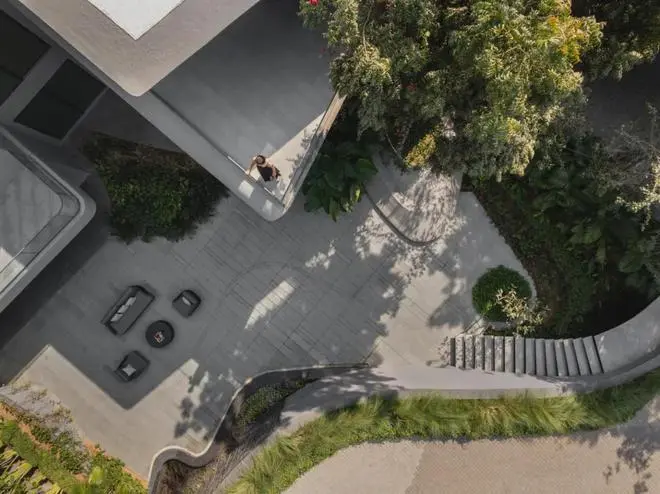
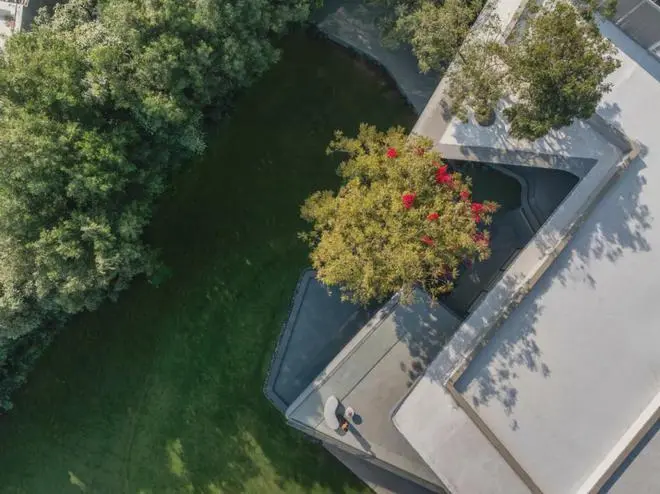
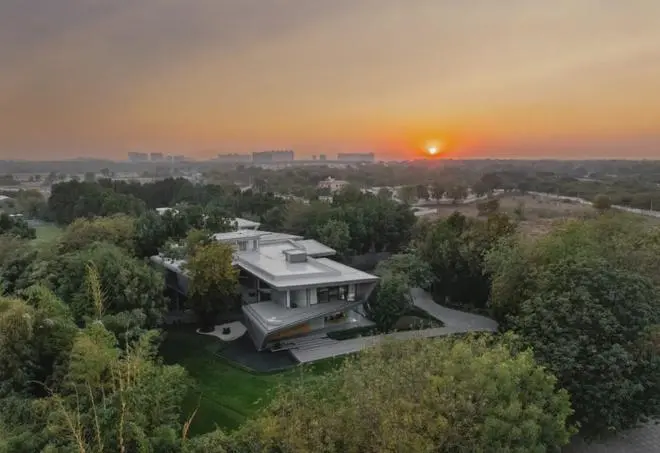
Nine X Nine Residence is located in Gandhinagar, India and was designed and completed by architectural firm Sanjay Puri Architects in 2025. The project sits on a 3,300 square meter site, and its smooth building volume cleverly shuttles between nine original trees. Two of the trees naturally blend into the open terrace area and become the focal point of the landscape, while the rest surround the building, creating a peaceful and vibrant living atmosphere.

The entrance to the residence is located in the northwest corner of the site and is surrounded by dense trees. Stepping into it, the outline of the building is gradually revealed in the field of vision, enhancing the layering and immersive experience of the space.
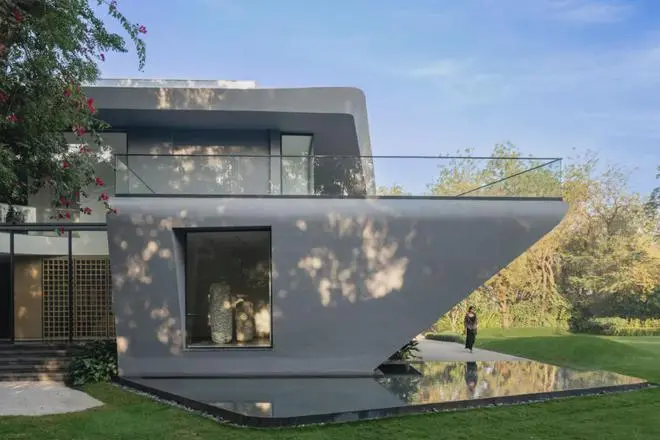
The main body of the building is located on the south side of the site, while the north side has a spacious garden set aside, ensuring that all rooms can face this full of green view. This layout not only optimizes lighting and ventilation, but also effectively copes with the local hot climate exceeding 35 degrees Celsius.
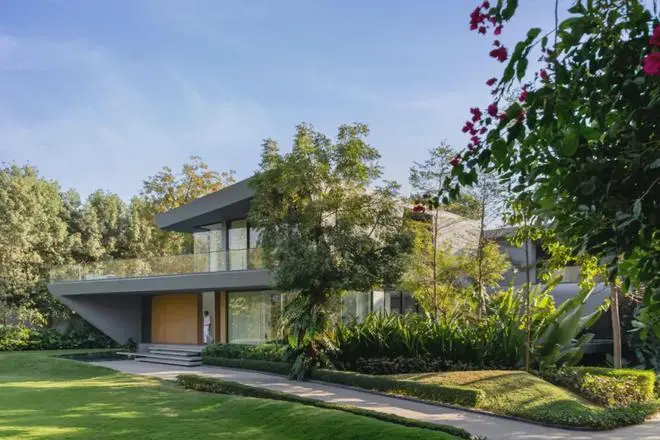
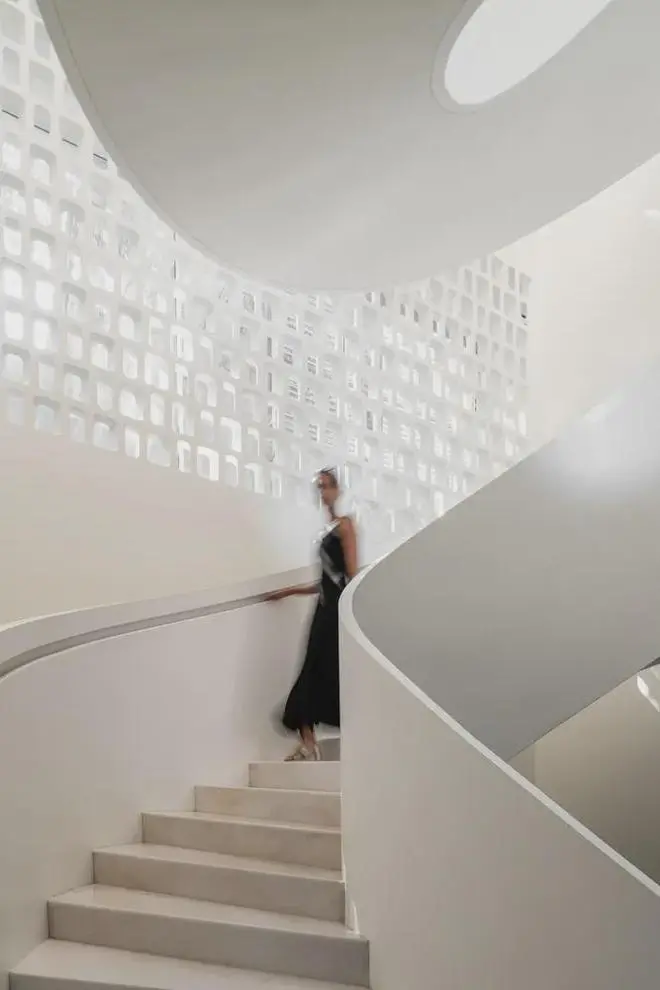
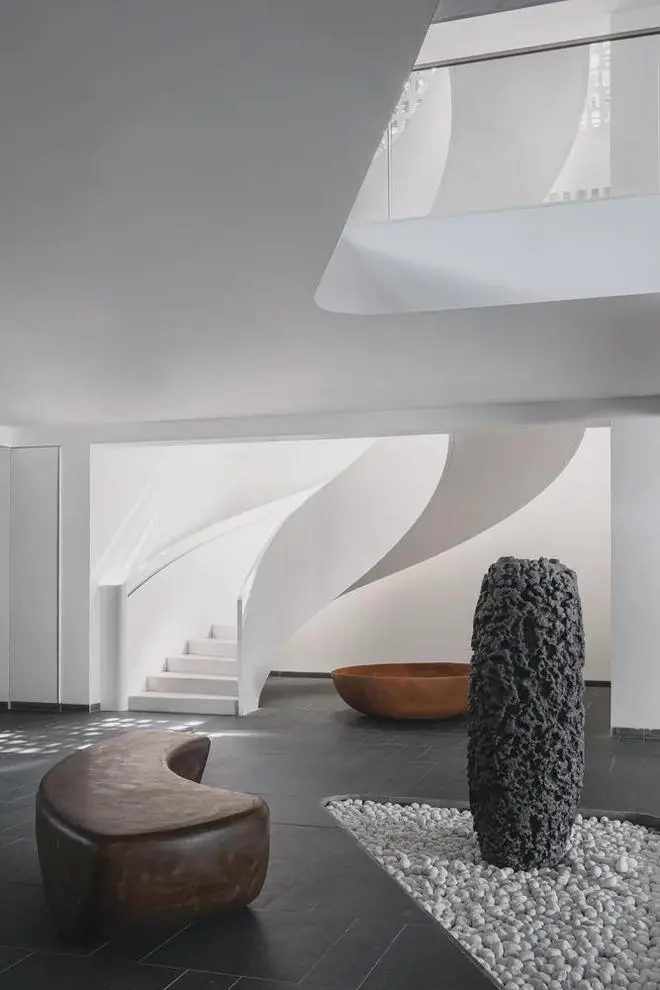
The plane and section of the house are “T”-shaped, with a central moving line running through the east and west, and a spiral staircase as the core, connecting different functional areas.
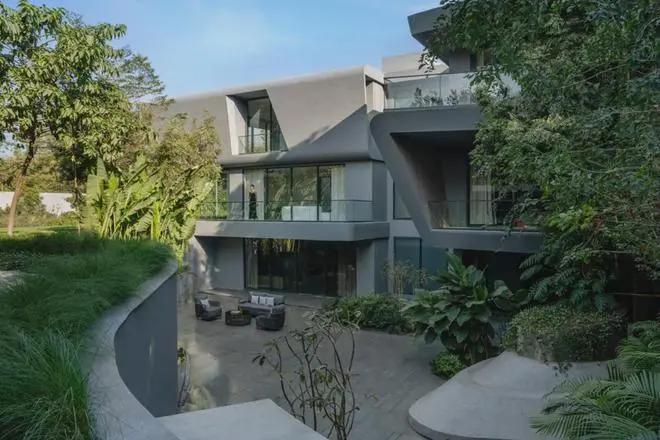
The building has three floors, including the living floor on the ground, the bedroom area on the upper floor and the entertainment area on the lower floor. The space distribution is reasonable and the dynamic and static partitions are clear.
A spacious sunken courtyard is set up on the west side, introducing plenty of natural light and fresh air into the underground space. Along the curved wall with waterfall, an open staircase connects the basement level with the ground garden, realizing a smooth spatial transition.
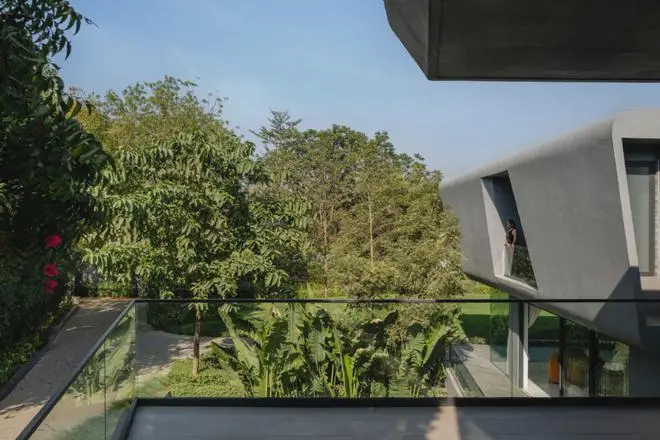
The waterfall on the west side and the shallow reflecting pool on the northeast side together form a passive cooling system, which makes the living environment more comfortable. In addition, six native trees have been retained in the courtyard, and three more are located on the southeast side of the site, further enhancing the integration of architecture and nature.
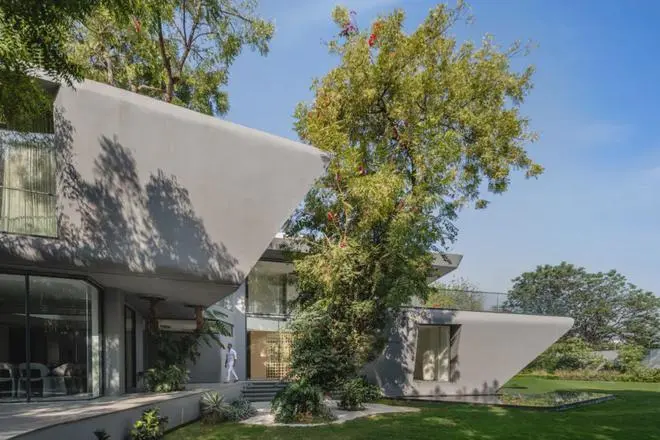
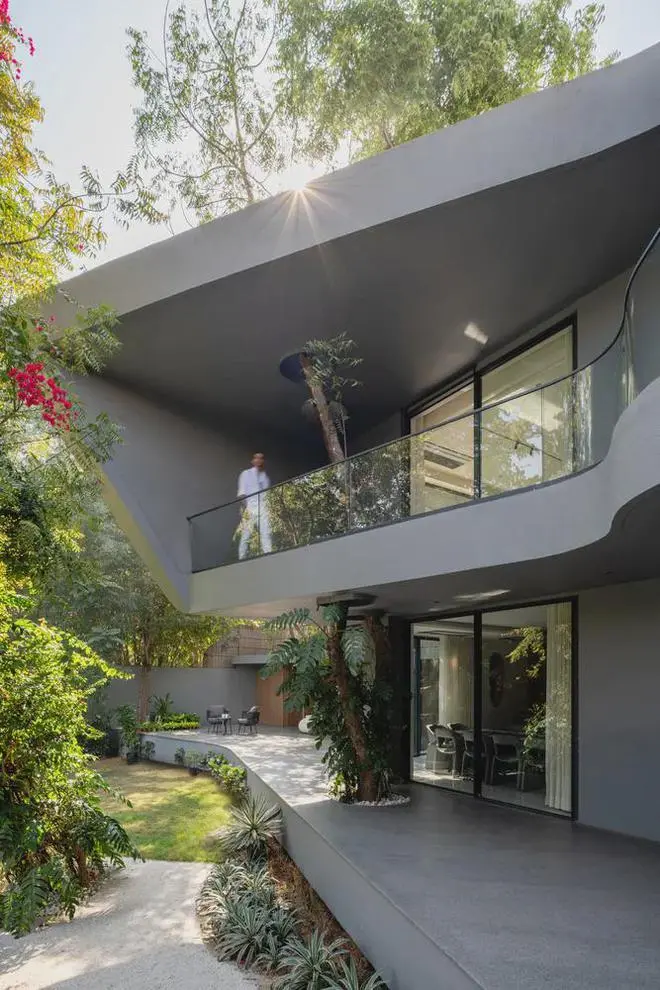
The entrance floor of the house is arranged with public spaces such as living room, dining room, kitchen and guest rooms, providing a spacious place for family gatherings and reception of guests.
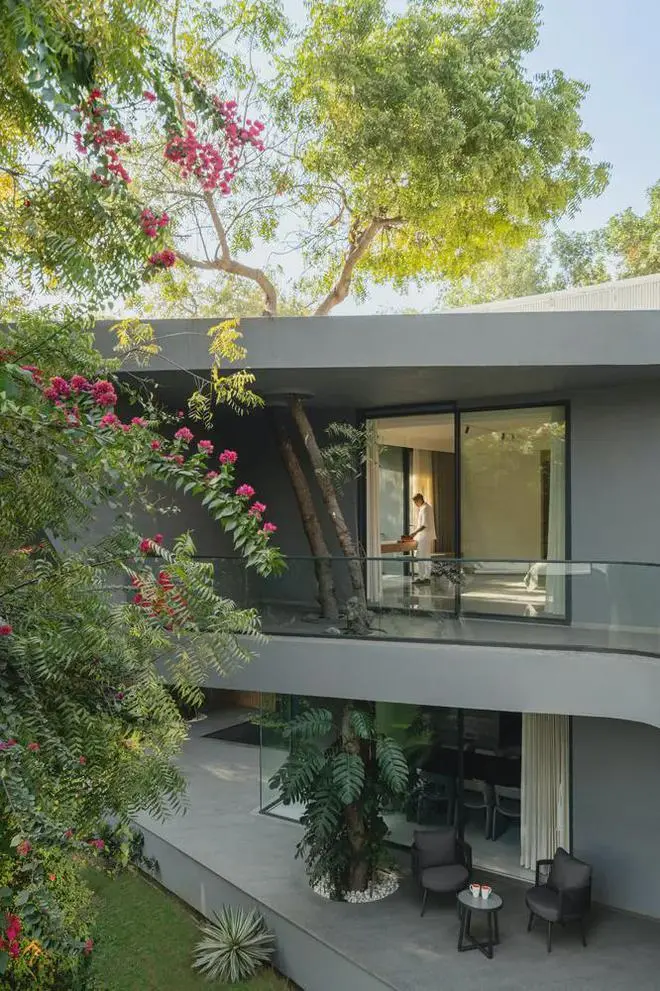
The upper floor is the private living area containing three bedrooms, each facing the courtyard and garden, achieving a close connection with nature. The basement floor is planned as an entertainment area, and there is a small gallery to display the owner’s art collection.
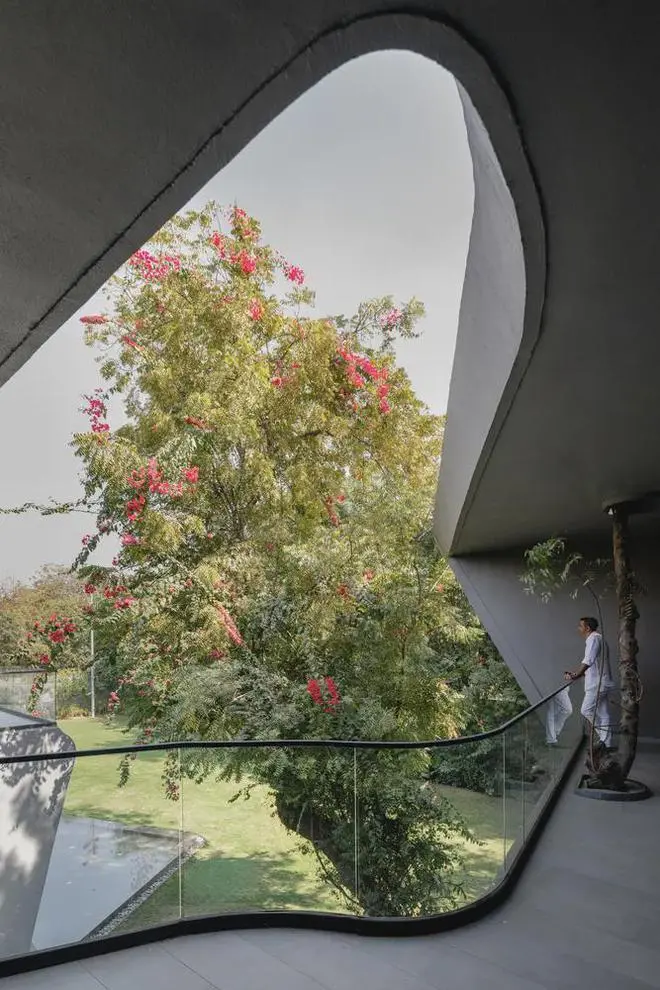
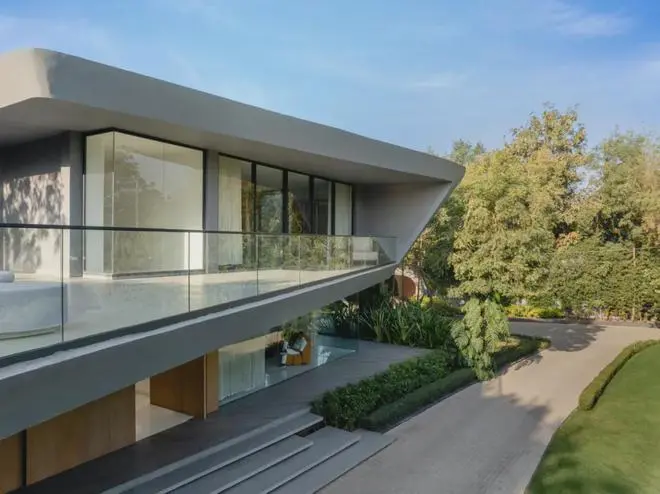
Each room is connected to large cantilevered terraces, sheltered in parts and open in parts, allowing it to be used flexibly depending on the weather. These recessed inward transition spaces are effective at lowering temperatures during hot summer months and keeping indoors comfortable.
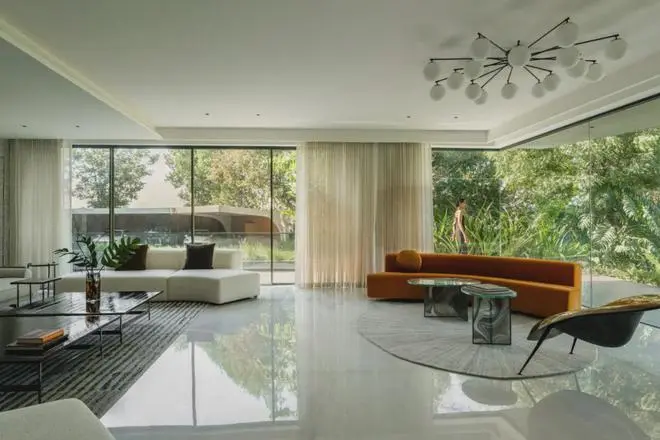
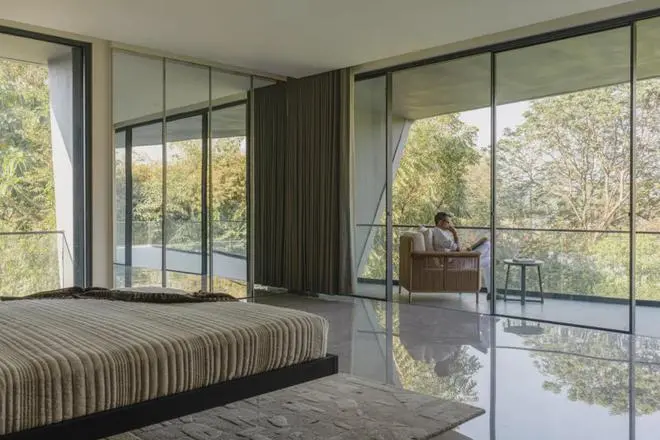
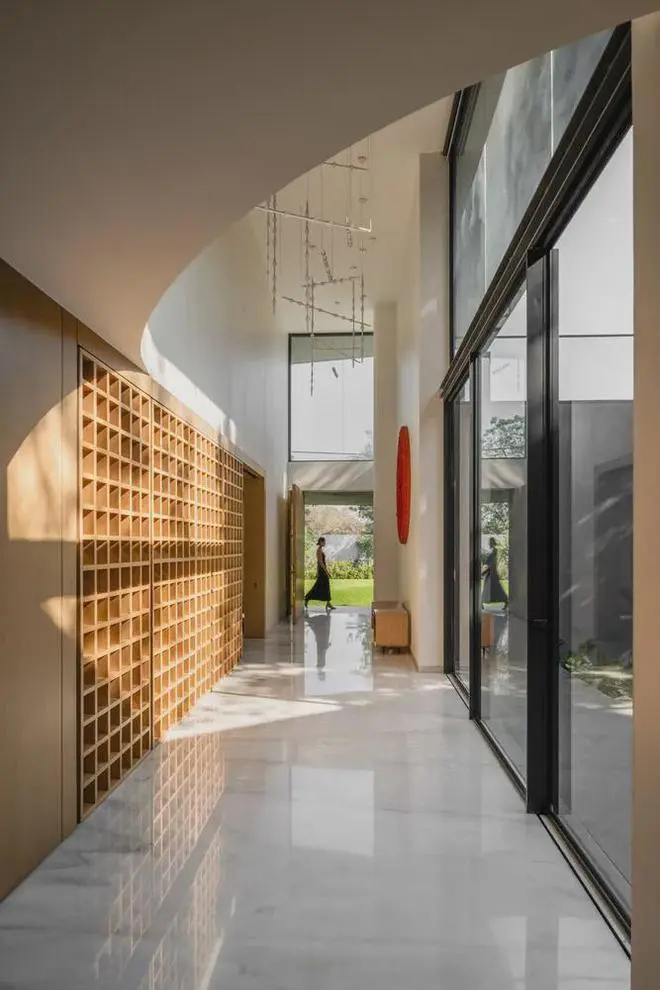
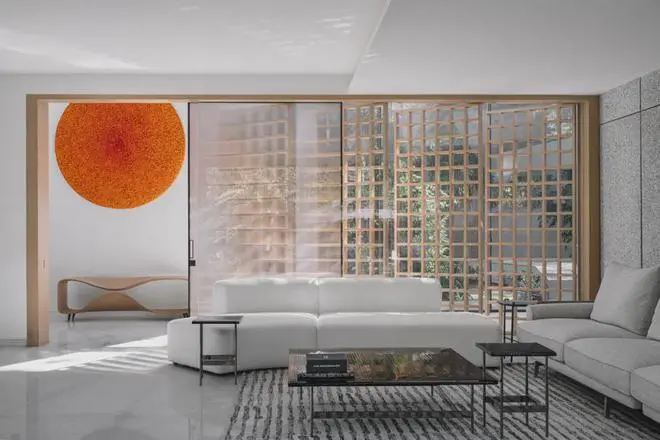
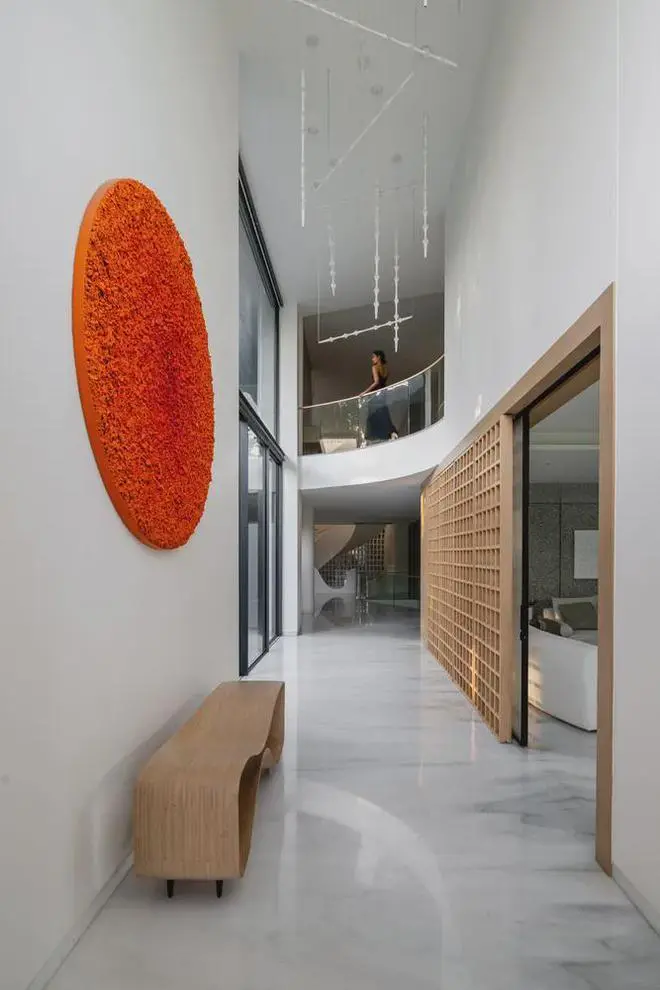
The overall interior design style is simple, with white marble floors, wooden furniture and low-key color matching, creating a warm and tranquil living atmosphere.
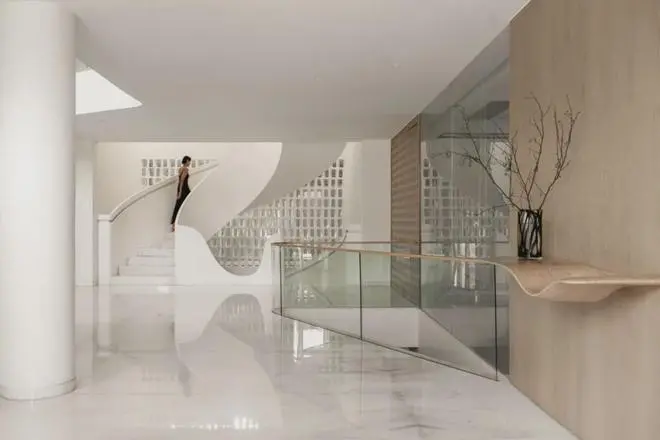
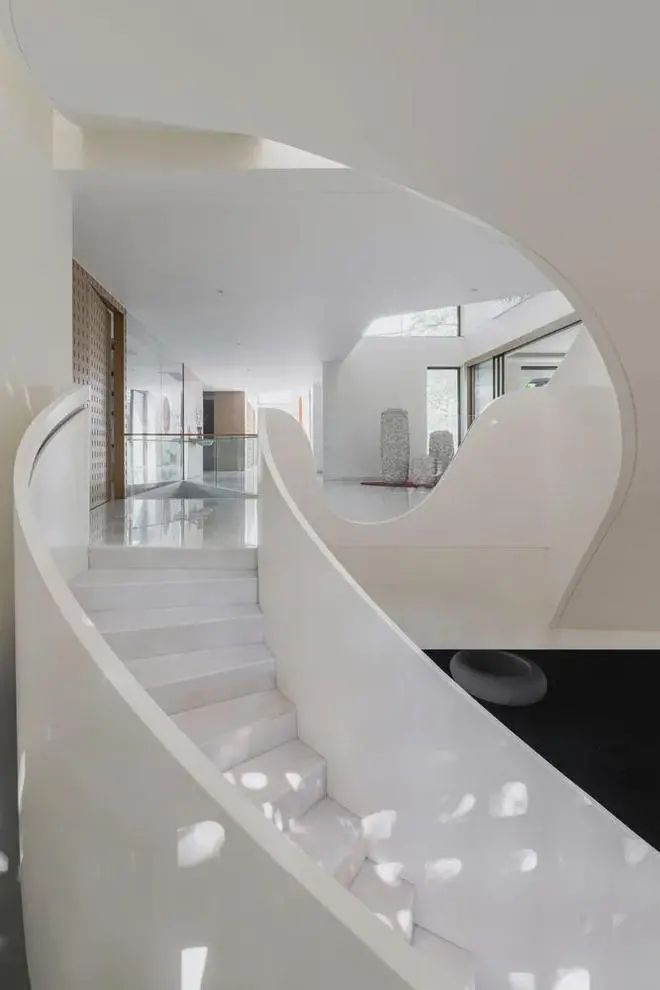
The house adheres to the concept of sustainable design, almost no air conditioning is needed throughout the year, and natural ventilation and shading systems are relied on to regulate indoor temperature. The building makes full use of natural lighting and is equipped with water recycling systems, rainwater harvesting devices, and sustainable materials to reduce environmental impact.
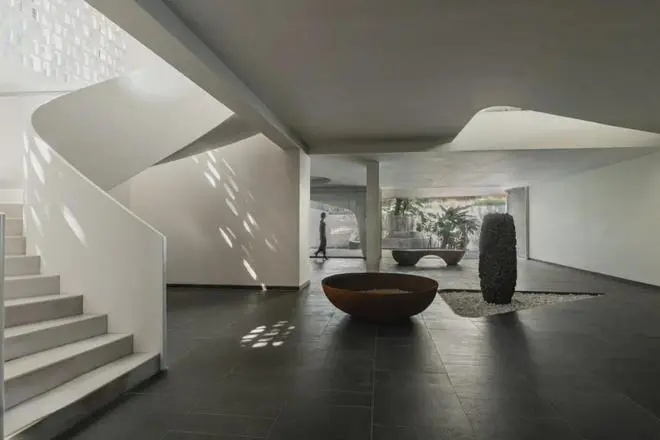
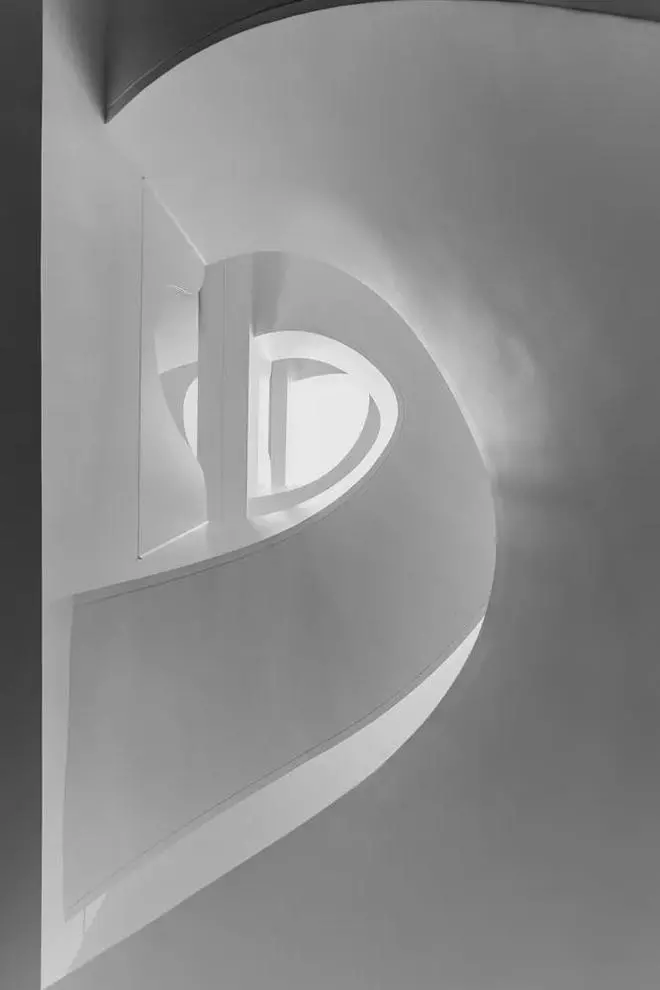
On the basis of respecting the original appearance of the site, the building retains all the native trees, and shapes the space between the trees according to local conditions, allowing the building and nature to interweave and coexist, presenting a unique ecological living experience.