 By admin
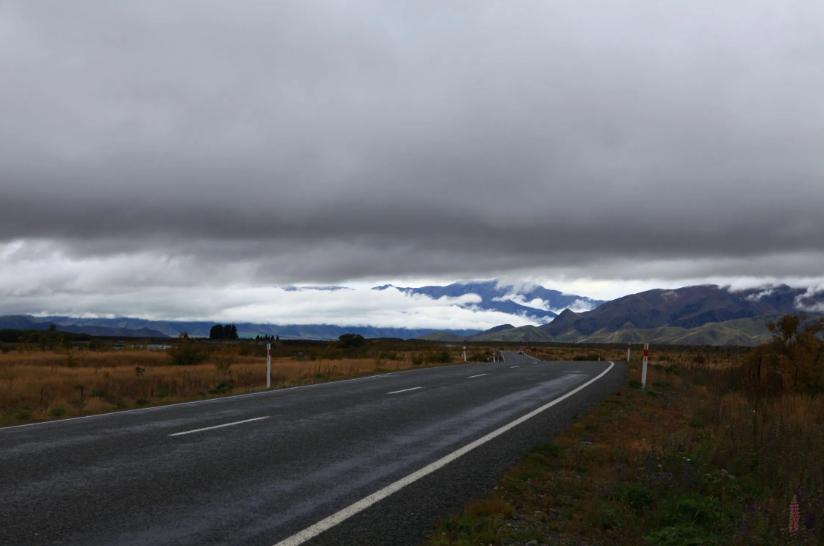
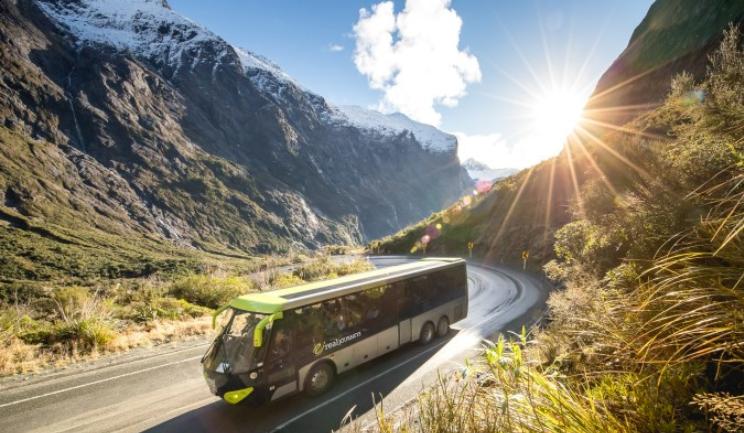
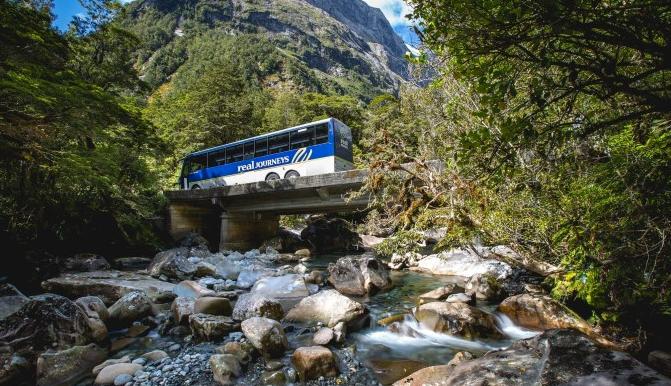
Starting from the small town of Tianau, the 120-kilometer journey will all take Milford Highway (Highway 94), which is known as one of the “most beautiful alpine roads in the world”. This road passes through the magnificent Fiordland National Park, and the landscape along the way is endlessly changing, from quiet lakes and dense rainforests to towering snow-capped mountains and waterfalls. It can be called a “moving geography textbook”.
Warm reminder:
Driving through Fiordland National Park by car is like a time and space journey. The most primitive natural ecology of New Zealand is preserved here. You can see ancient moss lichens and stroll on uncultivated natural grasslands. If time is limited, this crossing journey gives you a quick taste of the essence of the South Island; If you have traveled all over the South Island, this is the concentrated essence.
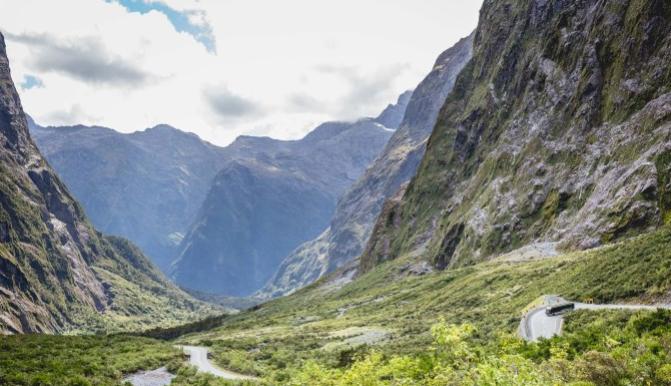
Then the question comes: Which places should not be missed on this 120-kilometer road? Which landscapes are worth parking and photographing?
Stop 1: Lake Te Anau
This quiet resort town is a stop before entering the most beautiful road. Here, you can enjoy Lake Tianau, the second largest lake in New Zealand, which is formed by glaciers. Even in midsummer, the lake water is cool and refreshing.
Warm reminder:
It is recommended to replenish supplies and fill up here. After entering the national park, it is a nature reserve. There are no shops or gas stations, and the cell phone signal will disappear. You can prepare some coins, and there is a coin-operated telephone at the midpoint of the road for emergency needs.
Stop 2: Eglinton Valley
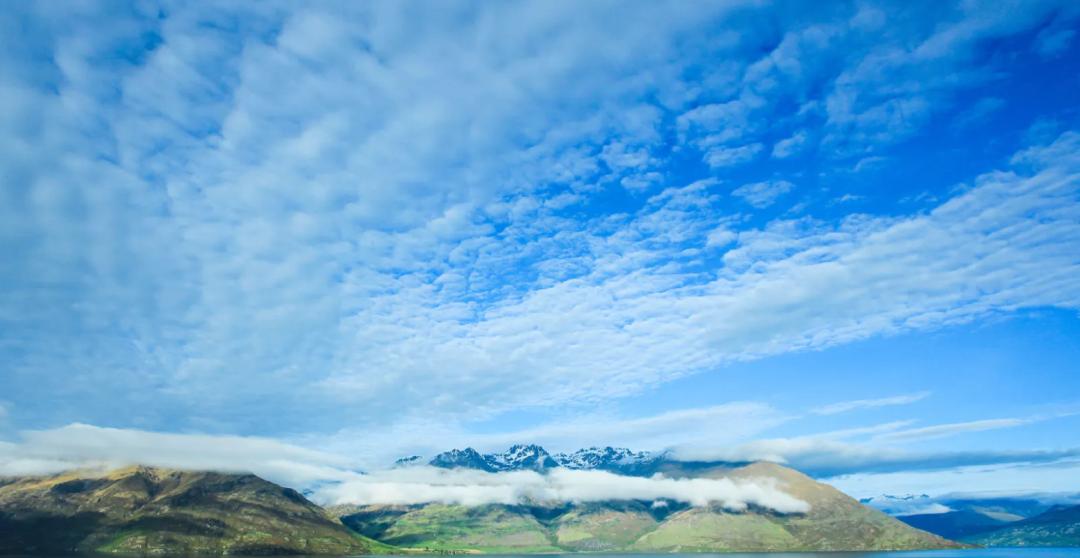
This vast grassland in front of us is the largest natural grassland in Fjords National Park (many pastures in New Zealand are cultivated by artificial burning of forests). Stand on the grassland overlooking the valley, which is the habitat of New Zealand’s only native mammal, the short-tailed bat.
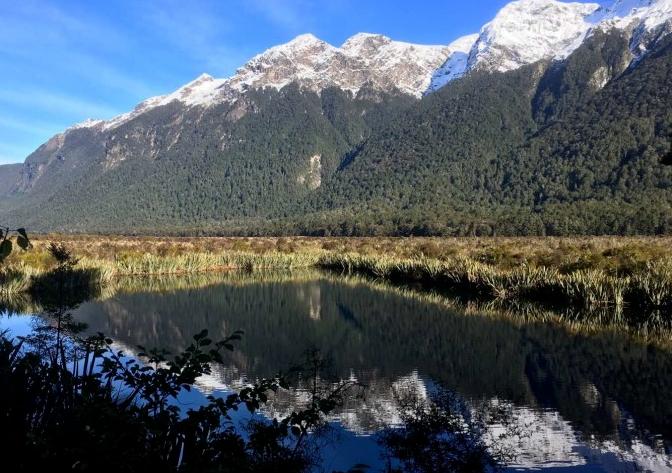
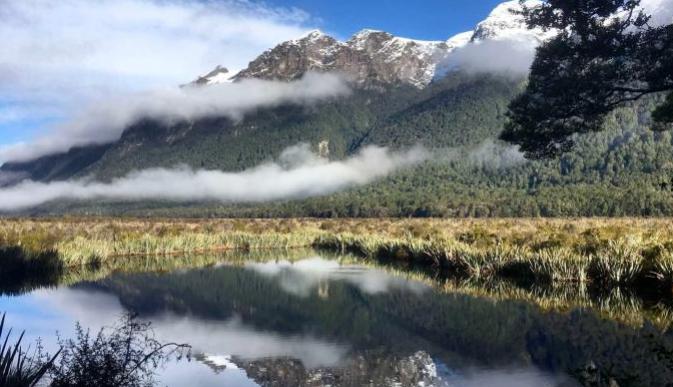
Stop 3: Mirror Lake
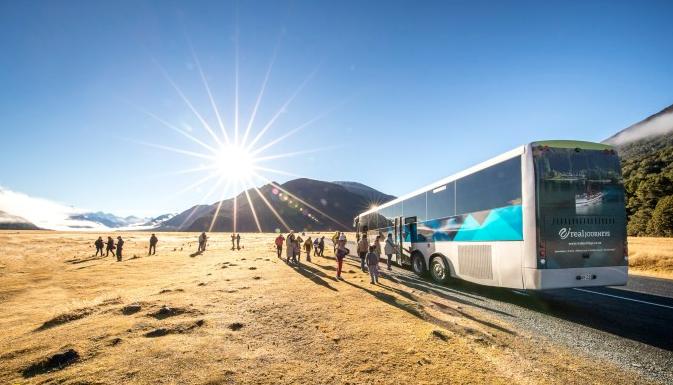
After parking, enter along a 100-meter trail with three observation decks. Known as “Little Nine Villages in New Zealand”, it is an excellent place to watch the reflection of snow-capped mountains. If you are lucky, you can also see the unique paradise duck in New Zealand.
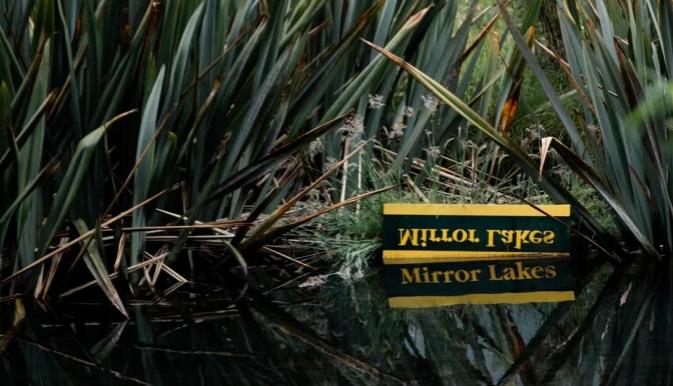
Don’t be disappointed even if the lake surface is wrinkled and you can’t see the reflection on a rainy day. You can observe the vegetation of the cold temperate rainforest up close along the trail, touch the thick moss that has grown for centuries, and feel the most pristine nature.
Stop 4: Knobs Flat
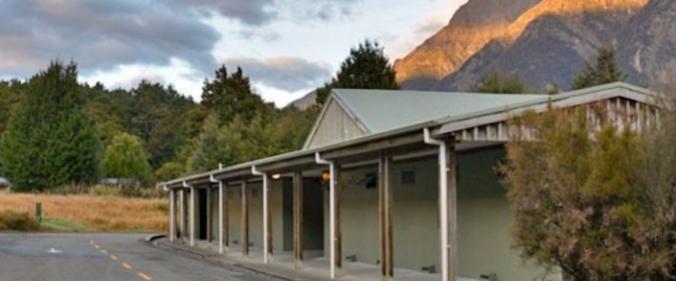
This is a midway service station, which provides simple accommodation and campground for overnight guests, as well as free toilets and small exhibition halls for day-trippers to help you understand the local nature and humanities.
Warm reminder:
This is the only place on Milford Highway where you can use coin phones. There are vehicle and road emergency rescue numbers posted on the wall next to the telephone. If you have any emergency, you can contact the outside world here.
Stop 5: Lake Gunn
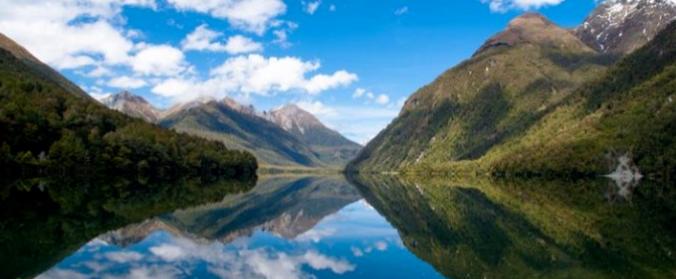
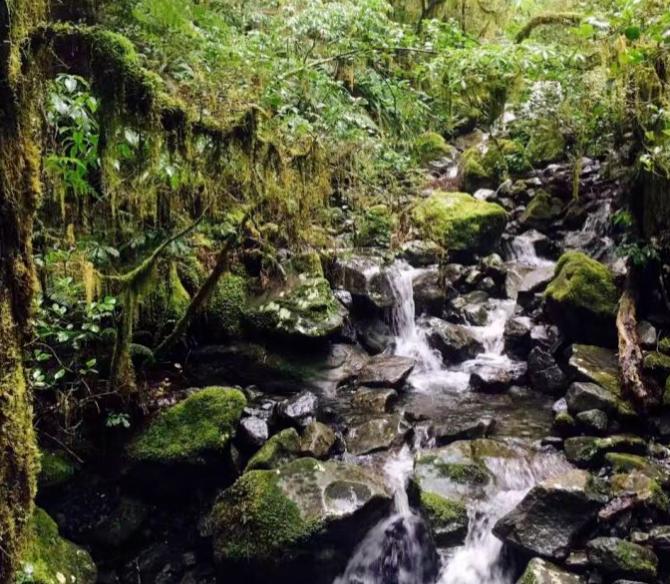
Remember the Foggy Forest in Lord of the Rings? This is where it was shot. After parking, take the left fork into the red beech forest and return along the loop after arriving at the lakeshore. This trail, which is only 1.4 kilometers and takes about 45 minutes round trip, is listed as one of the top ten most recommended short-distance trails in the country by the Ministry of Environmental Protection of New Zealand, allowing you to be in “Middle-earth”.
In addition, looking out at the mountain on the other side of the lake, you will see the exposed gray-white stone walls in the dense woods, which are the traces left by the “tree collapse”. Due to the abundant precipitation in the fjord, the soil surface layer is thin, and the roots of trees are coiled and symbiotic. Once a tree falls down due to wind and rain, it will be implicated, forming a unique natural phenomenon.
Stop 6: The Divide
Parking is available next to the cabin along the road. This is the start/end of the famous hiking route “Lutterben Trail”, and it is also the lowest point of the southern Alps in the east-west direction (530 m above sea level). If time is limited, you can go deep into the rainforest from here, climb to the commanding heights of “Key Summit”, overlooking the magnificent panoramic view of Fiordland National Park. The round trip takes about 3 hours.
Warm reminder:
There is a bathroom next to the cabin.
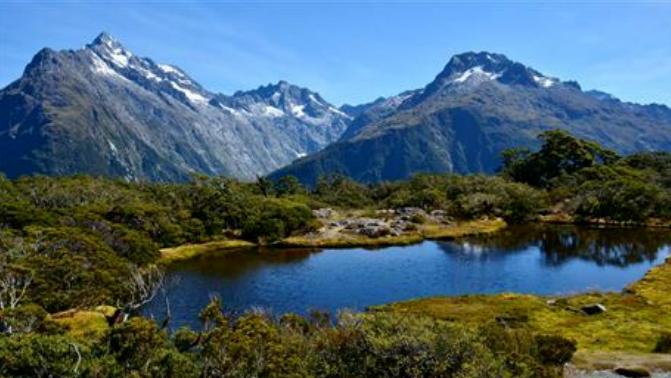
Stop 7: Holliford Canyon Lookout Hollyford Valley Look Out
Two minutes from the watershed, there is an observation platform. From here, you can overlook the entire Holyford Canyon, overlooking Christina Peak, which is snowy all year round.
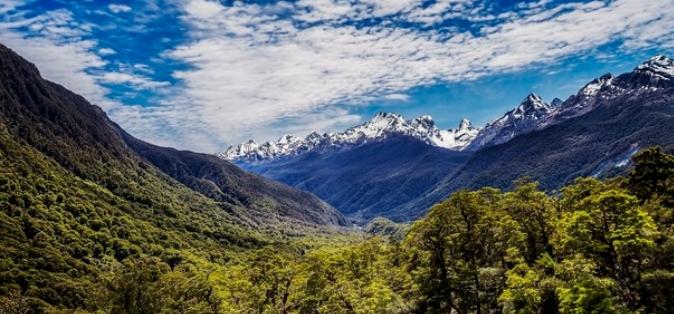
Stop 8: Hollyford River
Continue on and you will pass a small one-way bridge. On the left hand side of the bridge is the only permanent waterfall along the way-Christie Falls plummets down.
Warm reminder:
The bridge is a one-way street. Please pay attention to the traffic coming from the opposite side and avoid it in time. There are very few and narrow parking spaces here, so be careful when parking and taking photos.
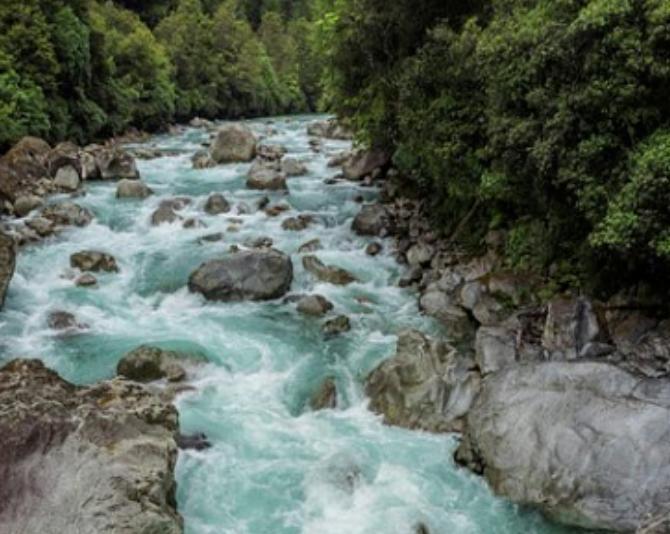
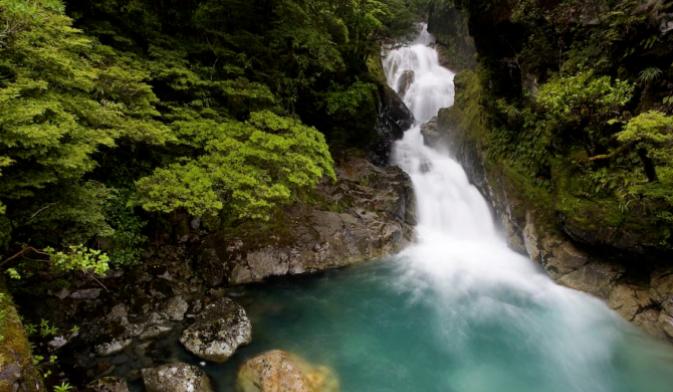
Stop 9: Monkey Creek
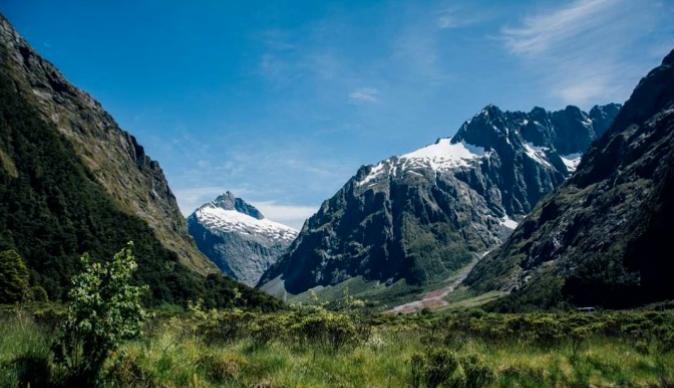
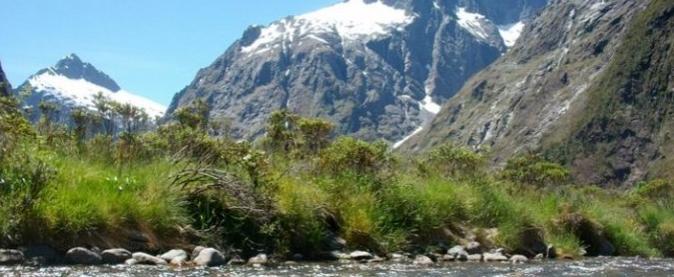
Bow your head, you can grab a handful of real pure snow-capped mountain mineral water; Look up, the towering snow-capped mountains are just around the corner. This is a stream formed by the melting water of snow and ice in the mountains. You might as well try this natural “snow mountain mineral water” with a water bottle, but don’t be greedy for a glass. The water is very cold.
In the snow at the top of the mountain in front of me, if you look closely on a sunny day, you can see the area with blue light-that is the unique steel blue color of glaciers that never melt all year round.
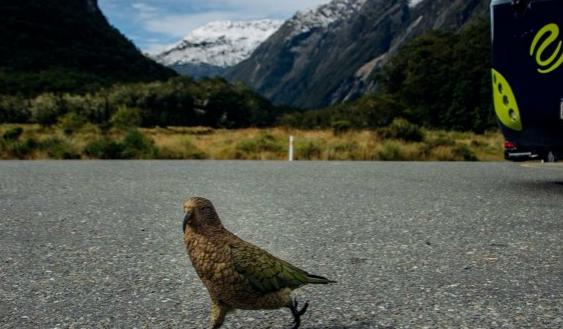
It is also the only alpine parrot in the world and the endemic species of New Zealand-Kea, which is often haunted. They are curious and unafraid of people, sometimes even pecking at the wiper rubber of a car.
Warm reminder:
Do not feed Kea. Relying on human feeding will make them lose their ability to prey in the wild, which is not conducive to survival. They are an endangered species, and each is equipped with a tracking anklet from the Ministry of Environmental Protection to monitor the number.
Stop 10: Homer Tunnel
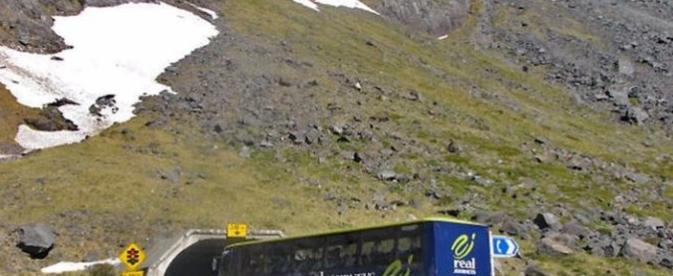
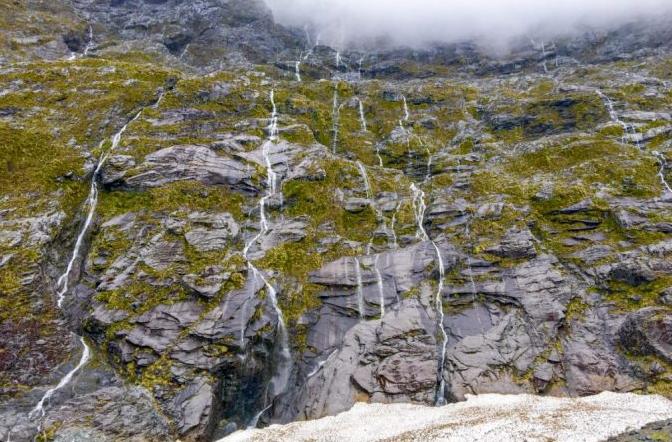
The only granite tunnel in the world, with a total length of 1,200 meters. On a rainy day, waterfalls rush on the mountain walls on both sides of the tunnel, and the scene is spectacular.
Warm reminder:
The tunnel is a one-way street, and traffic is controlled by traffic lights. If you get off the bus and take photos when waiting for a red light, be sure to pay attention to the reverse traffic and return to the car before the green light comes on. In winter, this is an avalanche-high area, and there are no-stop signs along the way, so no parking is allowed.
Stop 11: Cleddau Valley
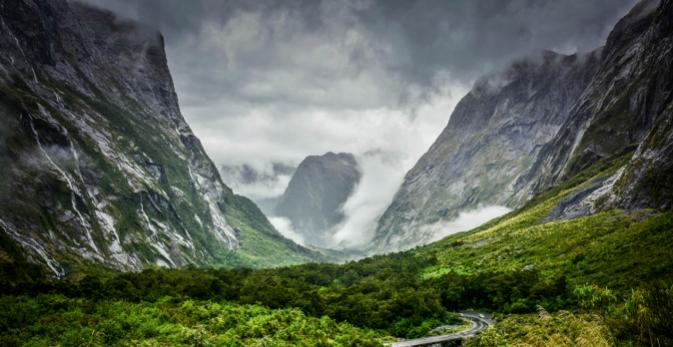
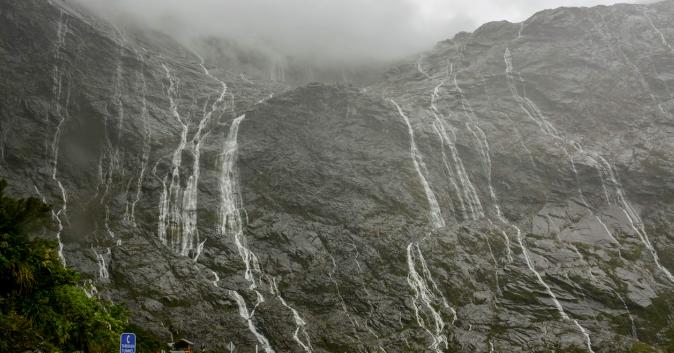
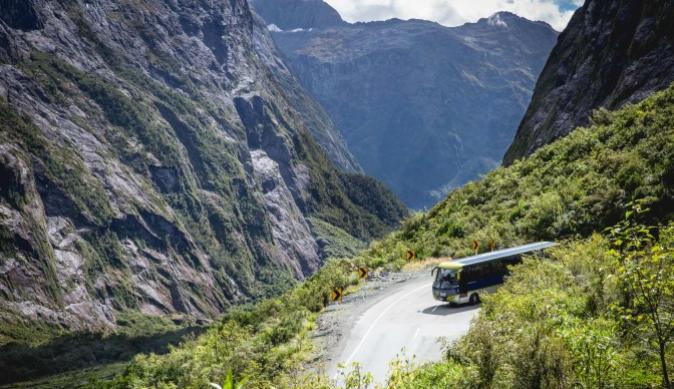
Be sure to look to the left when driving out of the tunnel! On a rainy day, countless waterfalls rush down the mountain wall like thousands of troops, and the scene is shocking. There is a parking spot at the second bend that circles down the mountain, where you can park and overlook the whole canyon of Wanren Cliff.
Warm reminder:
This is an avalanche-prone area in winter, and there are signs prohibiting parking along the way. Please don’t stop and get off here.
Stop 12: The Chasm
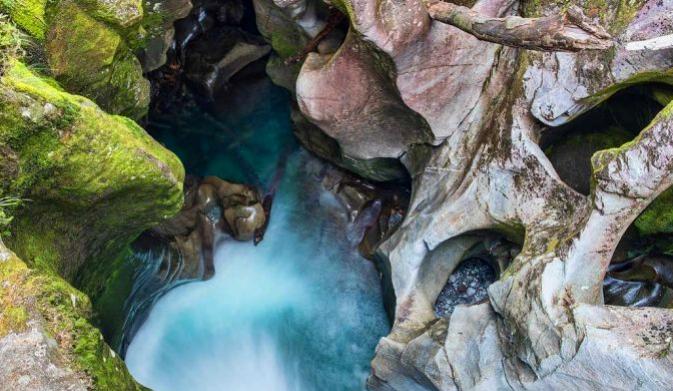
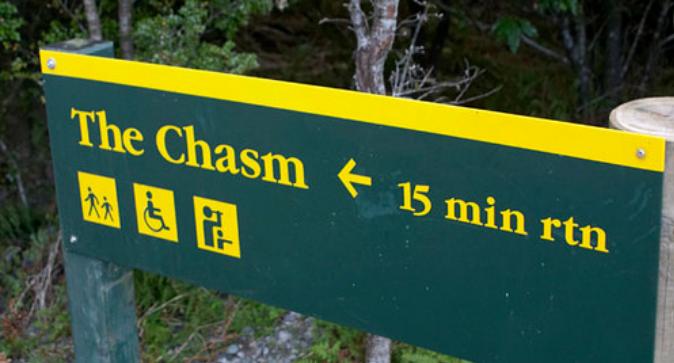
Witness the miracle of “water drops through stones” with your own eyes! This circular trail takes only 20 minutes round trip, and there is parking at the entrance. You will see the “stone pot” formed by flowing water for thousands of years-a deep pit on the surface of the stone ground by the vortex of water with stones. This kind of landform is very rare.
Stop 13: Tutoko River
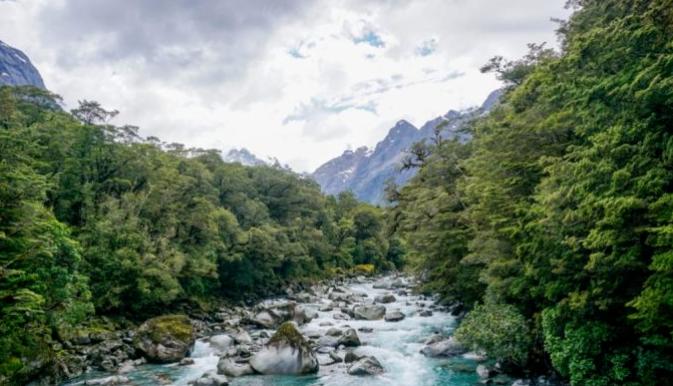
Here you will pass a suspension bridge, and there is parking space before crossing the bridge. The suspension bridge was built in the 1940 s, and the sidewalk is separated from the driveway. You can take pictures on the sidewalk after parking. On the right side of the window, you can see the highest peak in Fiordland National Park-Mount Tutok (2724 meters above sea level), which is covered with snow all year round.
Stop 14: Mitre Peak
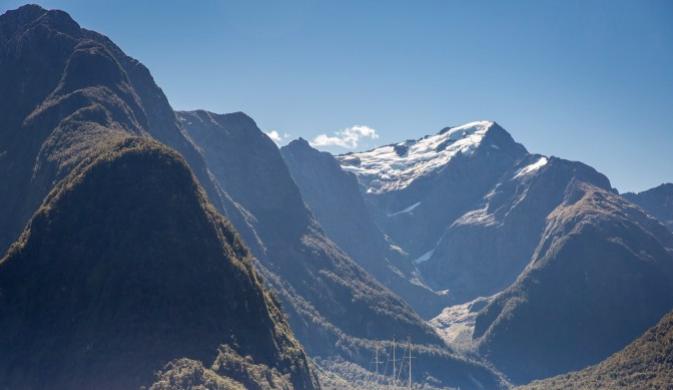
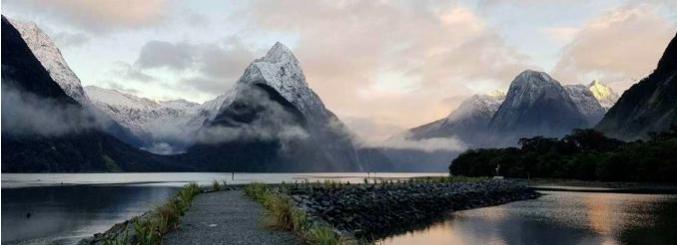
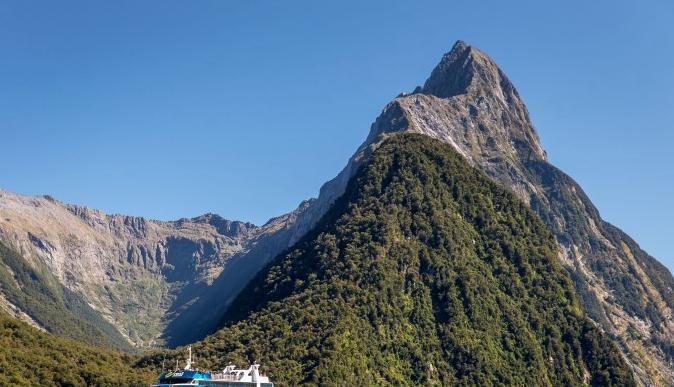
Named for its resemblance to a bishop’s crown cap. This 1,682-meter-high strange peak is one of the most famous landmarks in the fjord and even New Zealand, and it is also one of the highest mountains in the world that rise directly from sea level. The Maori call it “Wahutu”.
Warm reminder:
When approaching the dock, the first parking lot sign is the private car parking lot, and the entrance of the dock is the bus parking lot. Please do not park in the car.
Warm reminder:
It’s best to reserve ten minutes for a walk from the private car parking to the dock lobby.
If you have plenty of time, don’t rush into the lobby after parking your car. Turn left and walk along a small trail sign for about ten minutes to reach an open area. This is the perfect place to take a panoramic view of Jiaoguan Peak (and a reflection in fine weather).
Stop 15: Milford Sound
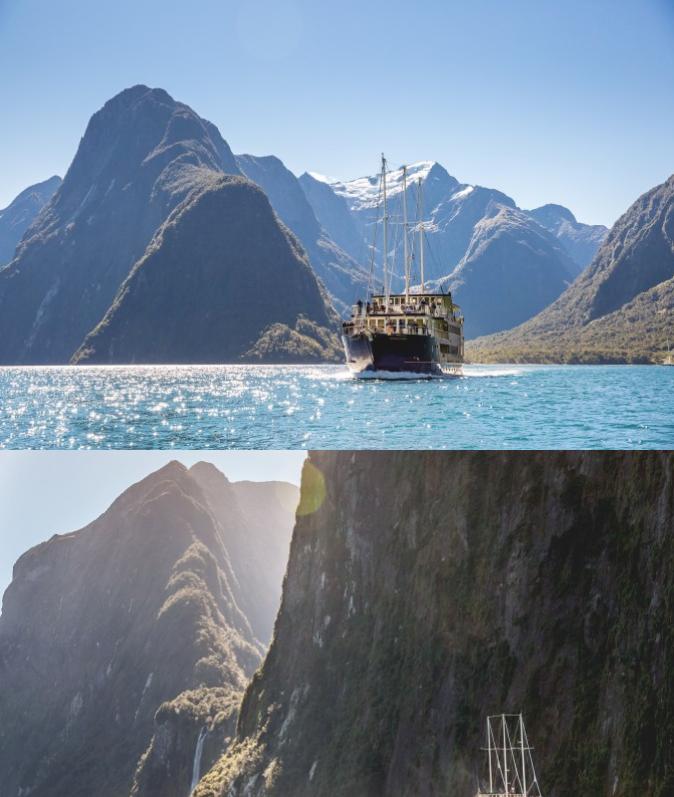
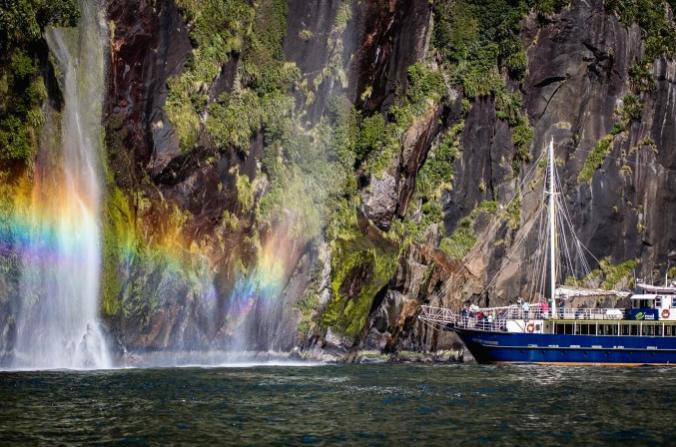
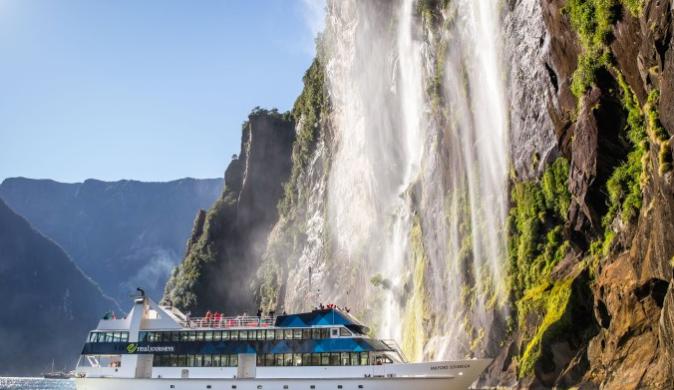
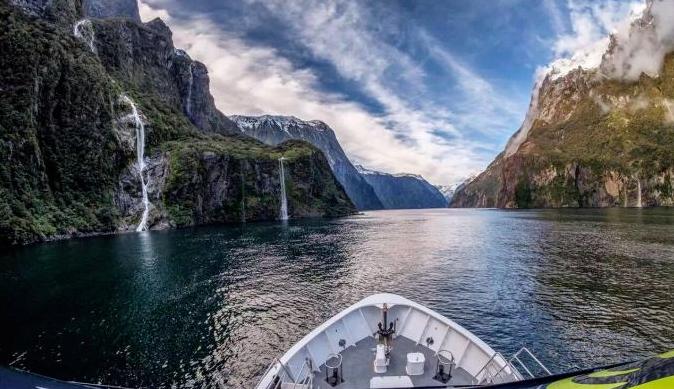
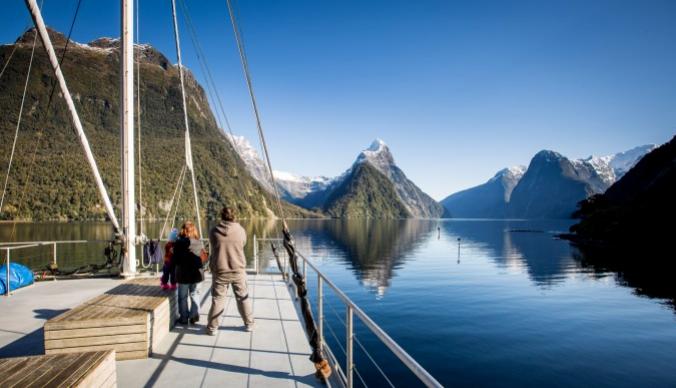
The ultimate destination, Milford Sound, known as the “eighth wonder of the world”. If it is said that “you are not a hero unless you visit the Great Wall”, then in New Zealand, if you don’t visit Milford Fjord, you won’t know the magnificence of the bay, the soul of the mountains and forests, and the scenery of heaven and earth.
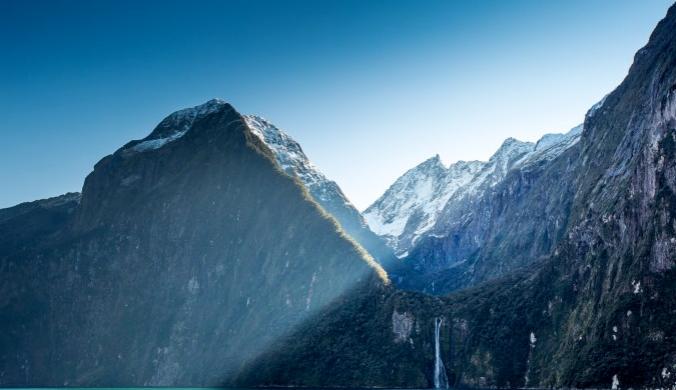
Milford Sound is formed by glacier cutting and seawater backflow. It is 16 kilometers long and has thousands of walls on both sides. It is the location of many blockbusters such as The Lord of the Rings, The Hobbit and Mission Impossible 6.