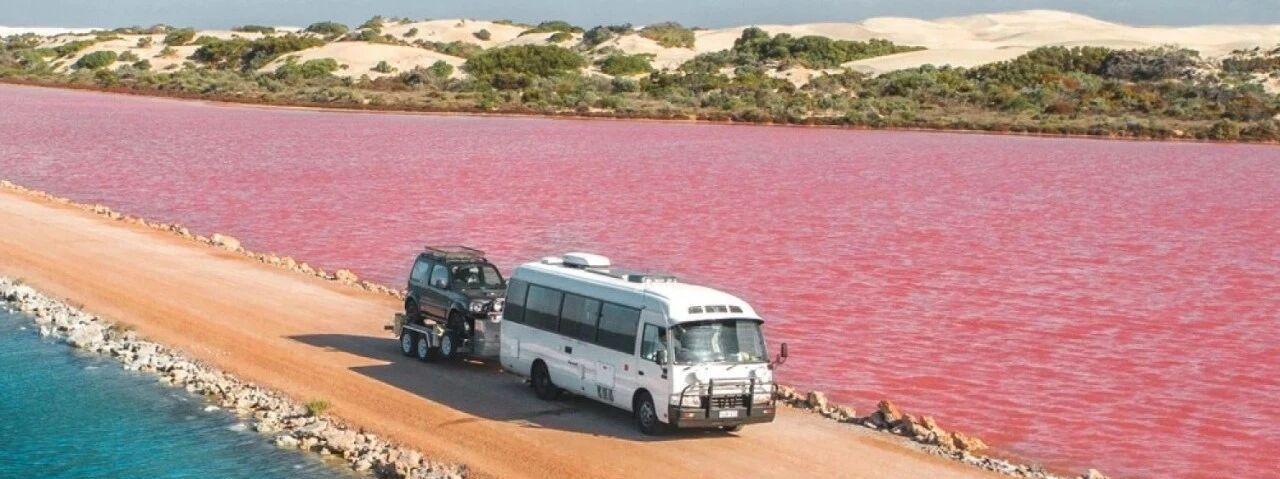
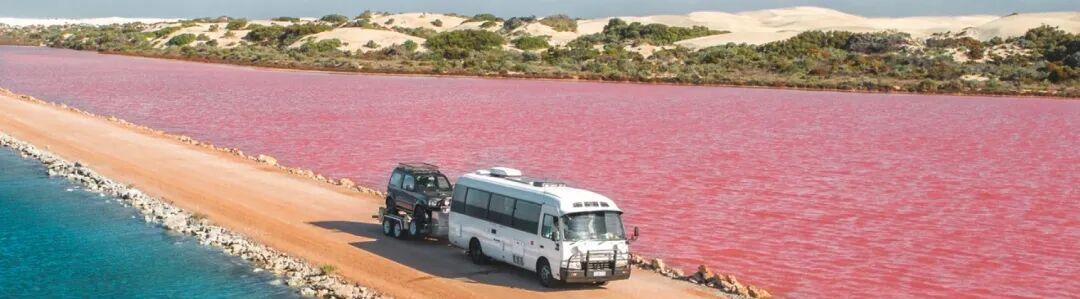
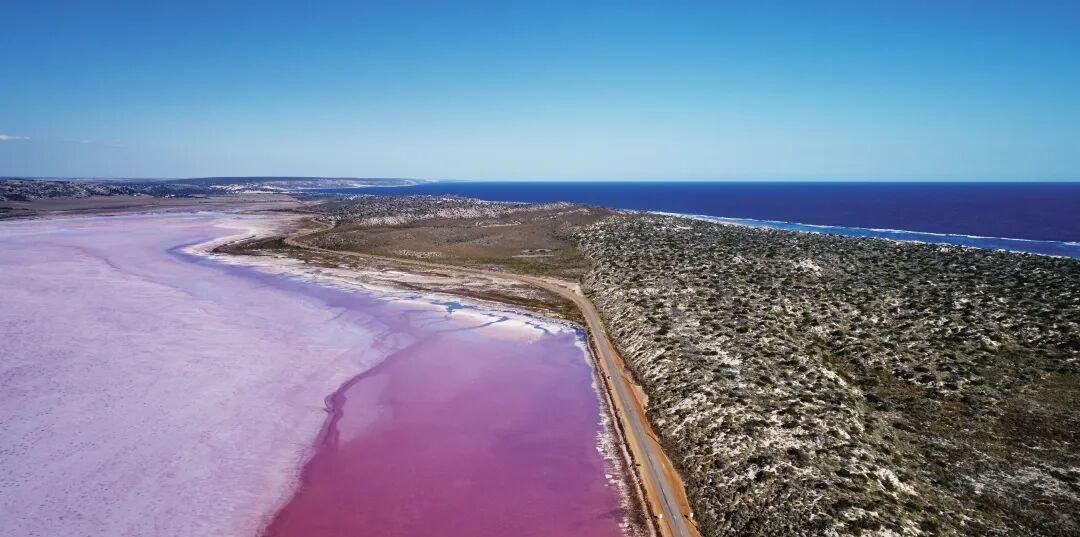
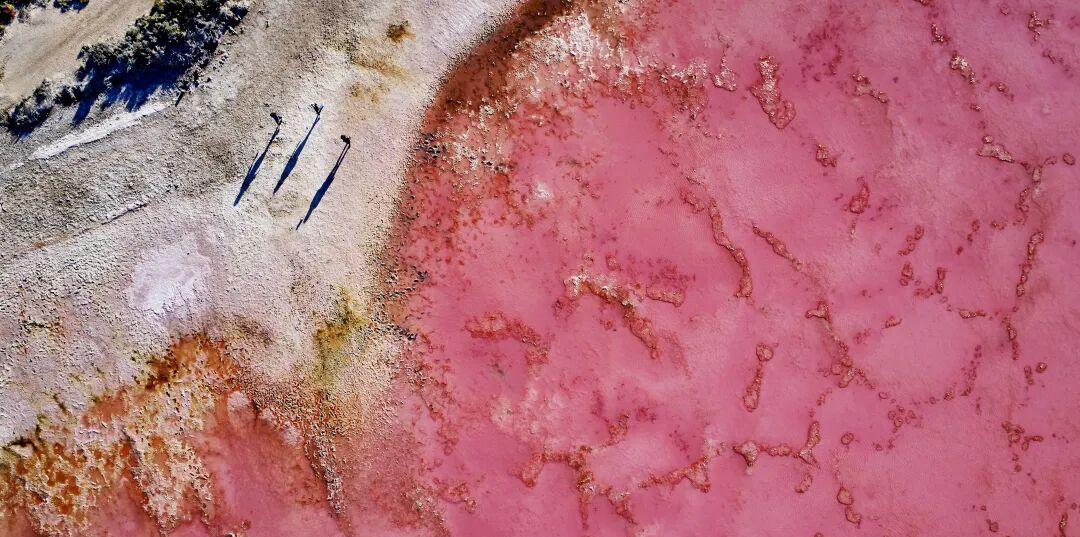
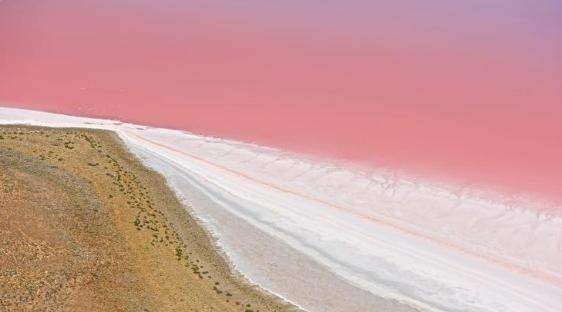
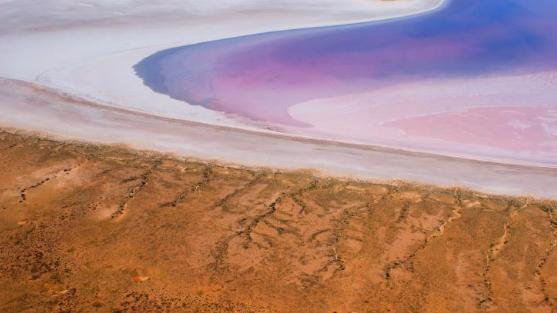
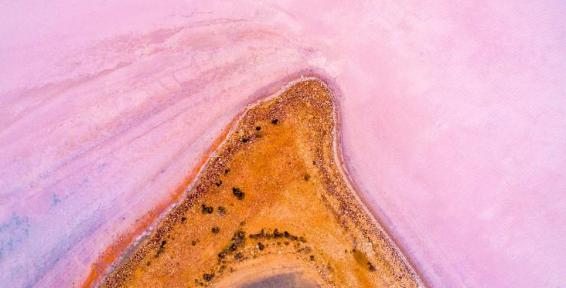
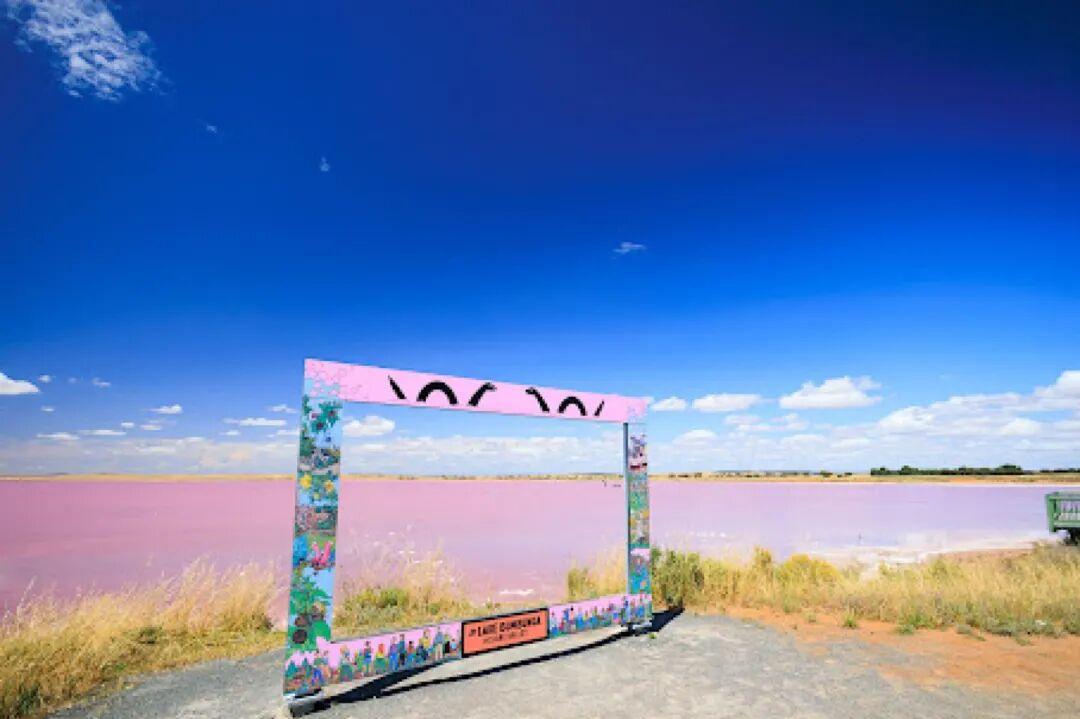
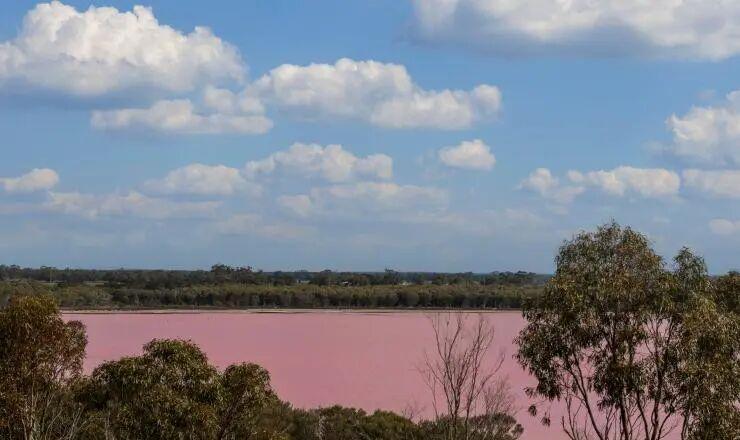
The world is colorful, but before I saw Lake * with my own eyes, it was hard to imagine that there was such a romantic place on earth. That touch of pink is beautiful beyond reality, as if it opened up another dimension of artistic conception…1. Reasons for the formation of * Lake
1. The role of microorganisms
Halophilic algae(e.g. Dunaliella salina): These algae thrive in high salinity environments and produce red or pink carotenoids (e.g. beta-carotene) as a protective mechanism against high salt and intense light radiation.
Halobacteria(e.g. halophilic archaea): These microorganisms also adapt to extreme salt environments, and the bacteridin (a red pigment) in their cell membranes will make the lake water appear pink.
2. High salinity environment
Lake * is usually a closed or semi-closed lagoon, with strong water evaporation and salinity much higher than that of seawater (even to saturation). This environment inhibits the survival of other organisms, but provides an ideal home for halophilic microorganisms.
Changes in salinity (such as dilution in the rainy season or concentration in the dry season) can affect the shade of color and may even cause the pink to temporarily disappear.
3. Chemical reactions
Salts in the lake interact with microbial metabolites, possibly forming other colored compounds. The pink color of some lakes may also be related to the oxidation reaction of dissolved minerals (e.g. iron, calcium), but this factor is relatively minor.
Second, when is * Lake the best?The Australian Lake * shows different color concentrations in different seasons. The best viewing periods are usually * * late spring to early autumn (September to March) * * in the Southern Hemisphere, especially * * September-November (spring) * * and * * 2-March (late summer and early autumn) * *.
Recommended season: September-March of the following year
1. Dry climate with little rain:
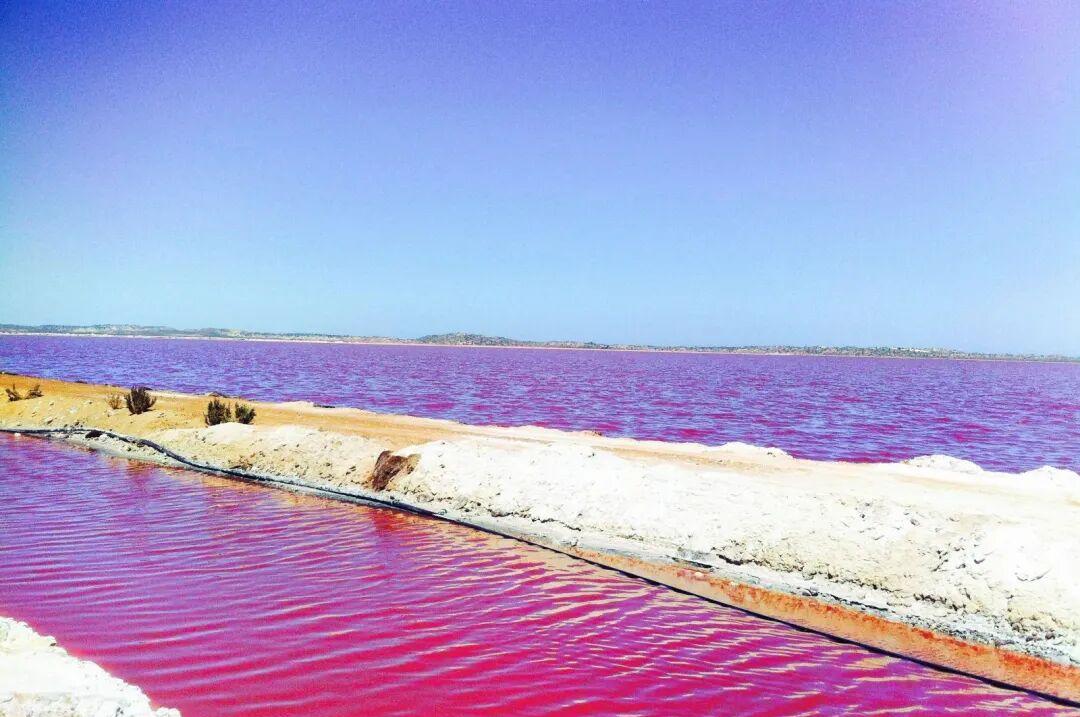
The color of Lake * is determined by beta-carotene produced by halophilic algae in the lake. High temperatures, intense light, and water evaporation will enhance algae activity and make the pink color more vibrant.
In summer (December-February), the evaporation is large, the salinity of the lake is increased, and the pink color is the strongest, but some areas may become lighter due to the drying up of the lake. Spring (September-November) and early autumn (March) have moderate temperatures, the lake is not fully evaporated, and the pink color is steady and perfect for photos.
2. Good light conditions:
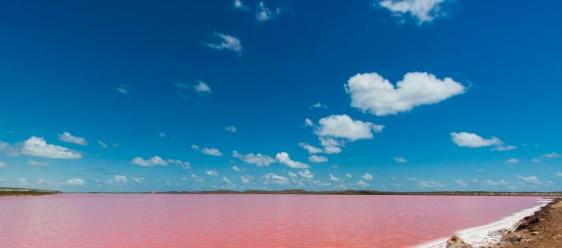
The pink color is most pronounced in direct sunlight between noon and afternoon. On cloudy days or early morning/dusk, the colors will be relatively lighter.
Other seasons (winter June-August)
The color may be pale or grayish pink: there is more rainfall in winter, the lake water is diluted, salinity is reduced, algae activity is weakened, and the color may not be as bright as in summer.
Exceptions:Some Australian lakes (such as MacDonnell Lake in South *) are influenced by the surrounding environment (such as the contrast between green eucalyptus trees and pink lake water), and may also show a different aesthetic feeling in winter.
3. What are the Australian * Lakes worth seeing?
Where: Near Esperance, an hour-and-a-half flight from Perth
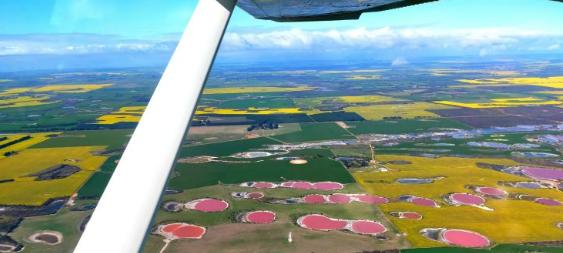
In Western Australia’s beautiful seaside town of Esperance, there’s not just one pink lake, but dozens of them-ranging from pale pink to glittering orange to crimson, in swarms. The best time to watch is from June to January, but the lake shows charming colors all year round. You can * * take FlyEsperance’s sightseeing plane * * to overlook this spectacle from the air while enjoying the white sandy beaches and azure coastline in Cape Le Grand National Park.
Location: Coral Coast, Western Australia
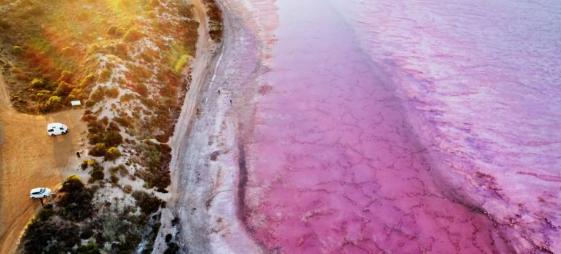
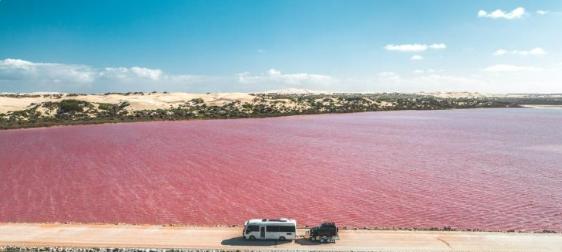
The coral coast of Western Australia is famous for its red cliffs and light blue waters. * * Hutt Lagoon * * is one of the famous attractions here, which is located less than six hours north of Perth. Depending on the season, time, and cloud conditions, the color of this lake changes from red to pink or purple. The morning or dusk is its most beautiful moment. You can enjoy it by driving along the George Gray Highway or overlook it from the air on a sightseeing plane from Shine Aviation or Kalbarri Scenic Flights.
Location: South Australia, near the Flinders Range
* * Lake Eyre * * The waters of the lake are light pink, orange and yellow, epitomizing the spectacular beauty of South Australia’s interior. It is a six-hour drive from Adelaide (an hour and a half by plane). Usually, it is a shining white salt pan, and the scenery is already impressive. But every few years, with the flood, it will become another dreamy appearance-the lake will appear pink and orange, bringing lush greenery and flocks of birds. There’s no better way to experience this desert oasis than * * from the air on a sightseeing plane like Wrightsair * *.
Location: Garley Valley, South Australia
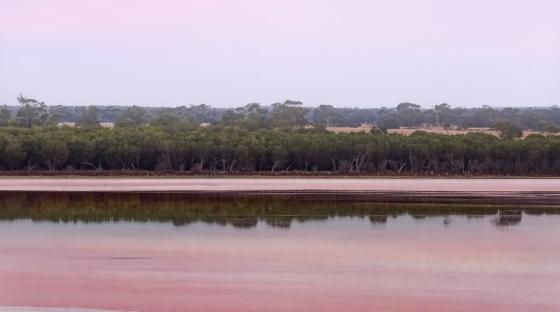
Less than two hours’ drive from Adelaide, * * The Paper Lake * * is one of the most accessible and photogenic * lakes in Australia. Its peculiar magenta lakeshore attracts countless photography enthusiasts. The hue of lake water varies with salinity, either pink or white. After your photos, you might as well drive less than an hour to * * Carley Valley * * and enjoy a glass of the region’s signature white Riesling at wineries such as Seven Hills Cellars or Eldredge.
Location: South Australia, Eyre Peninsula
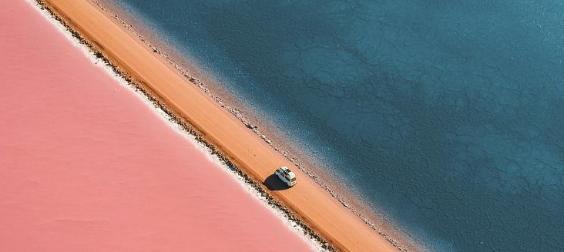
Pink, blue and green set off against each other to create the stunning beauty of * * MacDonnell Lake * *. Located on the Eyre Peninsula in South Australia, it is one of Australia’s most colourful pink lakes due to its extremely high salt concentration. Cruise along the “Watermelon Avenue” in online celebrity, which winds between Pink Lake and the blue-green sea water next to it. At the end of the road, even more wonderful * * Cactus Beach * * awaits you.
Location: Outback South Australia
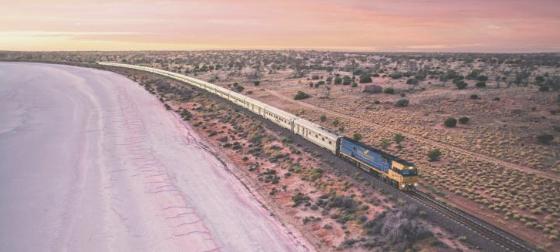
* * Bucks Lake * * is located in the vast interior of South Australia and shows its beauty all the time. This shallow pink lake is highly saline, with flickering salt crystals forming underwater. Due to its remote location, it is also an excellent stargazing place. You can take the * * Indian Ocean Pacific train * * and encounter this lake that seems to be falling into a pink dream during the world-class train journey between Sydney and Perth.
Location: Murray Sunset National Park, Victoria
The bright starry sky and rocky cliffs of Murray Sunset National Park are spectacular enough, but the * * pink lakes * * scattered in the wilderness of northwest Victoria are even more charming. It takes about five hours to drive from Melbourne. These lakes vary in color, some are bright pink and some are shining white, and are usually most vivid on cloudy days. You can stay for a few more days, explore the beautiful trails here with different difficulty levels, or stay in a picturesque campsite for a night.The wonders of Lake * are amazing. The lake water is like dreamy rose syrup, which forms a strong visual contrast with the blue sky and white sand. Walking by the lakeside, you feel like you are in a secret place of alien stars, and the uncanny workmanship of nature makes people intoxicated. Salt crystals flicker in the sun, adding magical color. This is a short but unforgettable visual feast.

 By admin