 By admin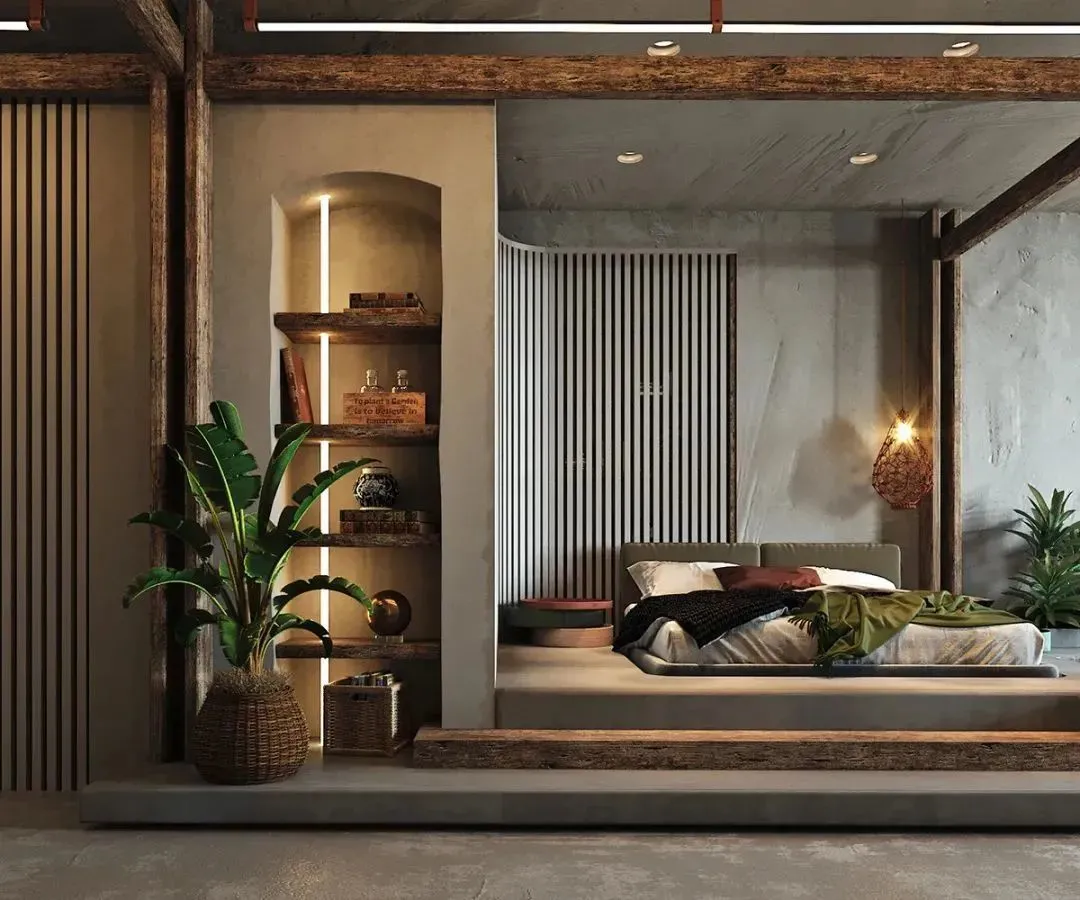
In recent years, tatami has been favored by everyone, not only because it can effectively save space and have rich styles, but also because of its powerful storage function, which adds more possibilities to the room. So, what details should we pay attention to when decorating tatami mats? Let’s take you to find out today ~

01
How to choose the custom style of tatami?
The styles of tatami can be roughly divided into two types: integrated type and combined type.
① Integrated type.It refers to the tatami style that is assembled into an “integrated” tatami style with corresponding “parts” through on-site production or finished products. This style is large in size and weight, and sometimes even needs to be fixed on the wall or ground, so it has the disadvantage that it is not easy to move, replace and dismantle. However, it can make the space look more neat and uniform.
Small tip:Doing moisture-proof treatment in the “ground area” occupied by tatami mats and reserving enough exhaust holes can effectively alleviate the internal moisture problem.
② Combined type.It is composed of a plurality of “independent” wooden boxes with suitable height and not fixed to the wall or floor. When it is necessary to be used as tatami mats, these boxes can be split together according to the shape and size of reserved positions; When not needed, they can act as storage boxes, seats, or change functions by moving, bringing more flexibility to the home…
This style of tatami is easy to move, flexible and simple, but the storage space at the “bottom” is based on a single box, which may have certain restrictions on the size of the stored items.
02
How to design tatami size?
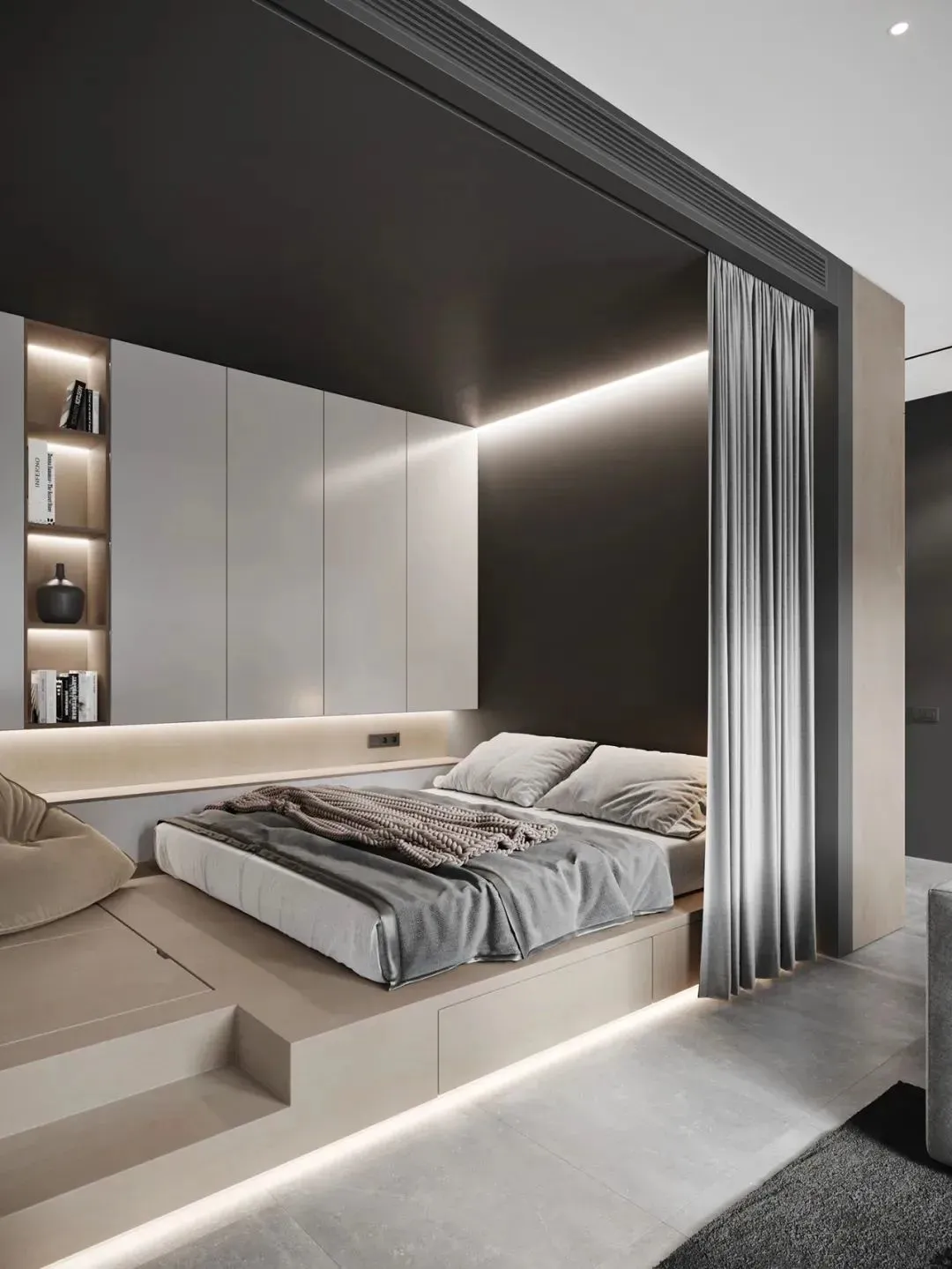
Generally speaking, the design height of tatami mats needs to be decided according to the floor height of the house and the storage space required. If the floor height is high, such as reaching 3 meters or more, it will be more practical to choose tatami mats of 40 cm or even higher. However, if the floor height is short, the design height needs to be reduced accordingly, so as not to feel depressed when moving on it.
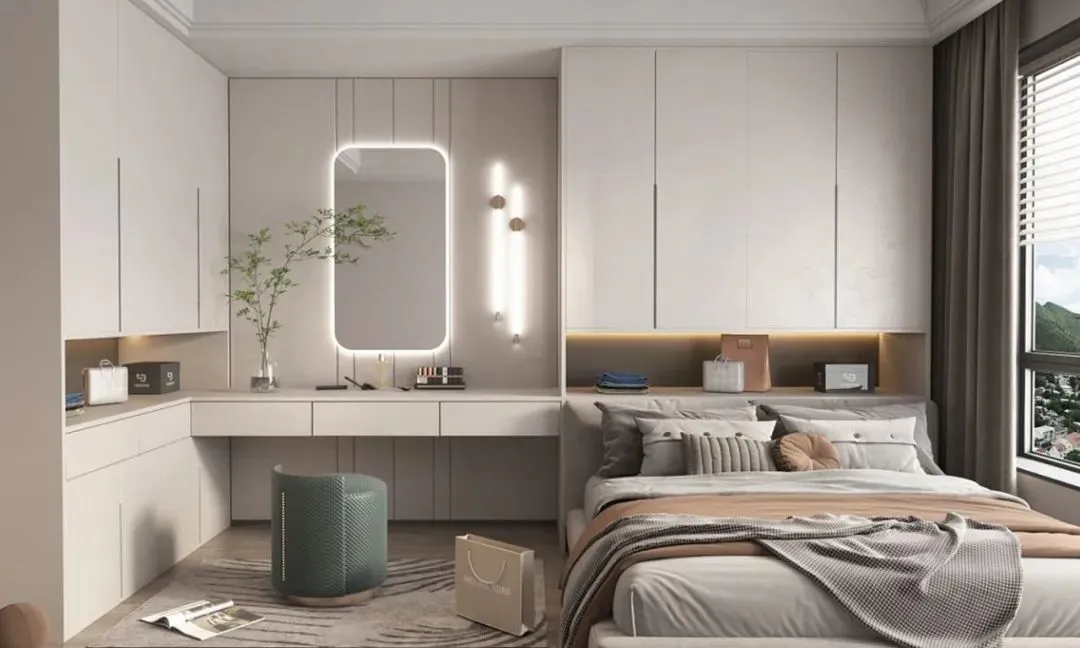
Usually, the width of tatami mats in the room is 120, 150, 180, 200 cm and other specifications, and the standard thickness is 40 or 45 cm, but the thickness is commonly used 40 cm. (Dimensions are in cm)
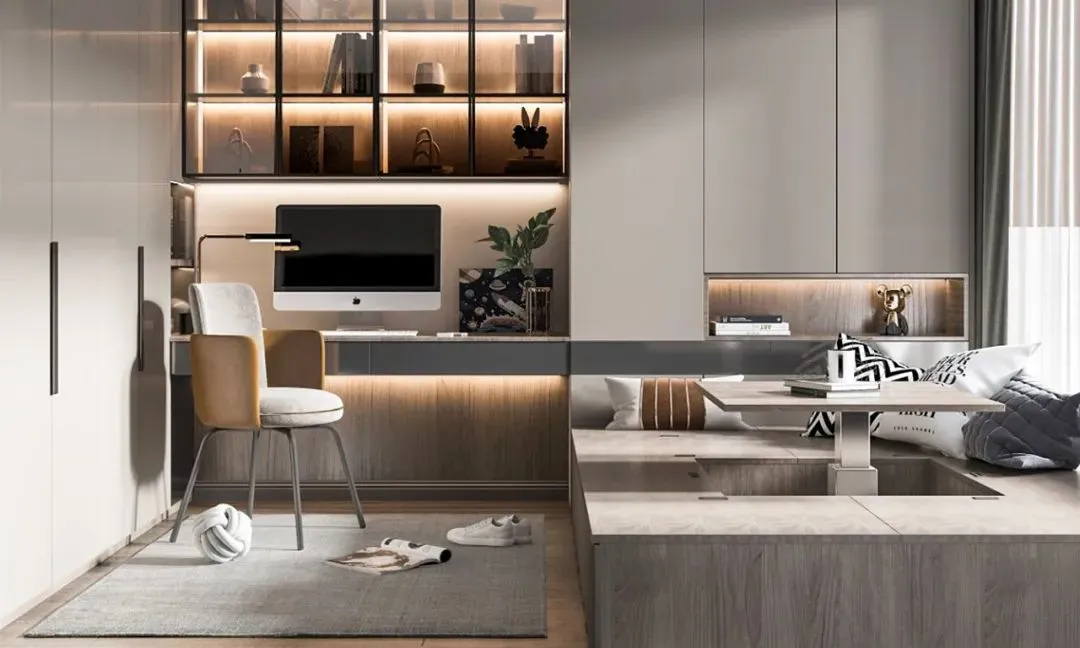
Precautions for tatami installation:
1. First of all, let’s start with the chassis. The chassis of tatami mats must be insect-proof and moisture-proof, and it’s best to reserve ventilation holes.
2. The surface board of tatami floor can be made of solid wood or composite flooring, but it should also be treated with moisture-proof and insect-proof treatment, and be careful not to damage the original waterproof layer.
3. Pay attention to the design height of the floor: if the lifting table is not designed, the height is generally between 150 mm and 200 mm; If the lifting table is designed, it will be determined according to the actual height required.
4. Don’t damage the original waterproof layer. It’s best to do a waterproof test before installing tatami mats. If there is any leakage, it needs to be waterproofed again.
5. Ensure that the drainage on the balcony or window floor is smooth to avoid accumulated water seeping into the room.
6. Any decoration should be based on the structure of the house, and do not destroy the original structure, especially the load-bearing structure, otherwise the consequences may be very serious.
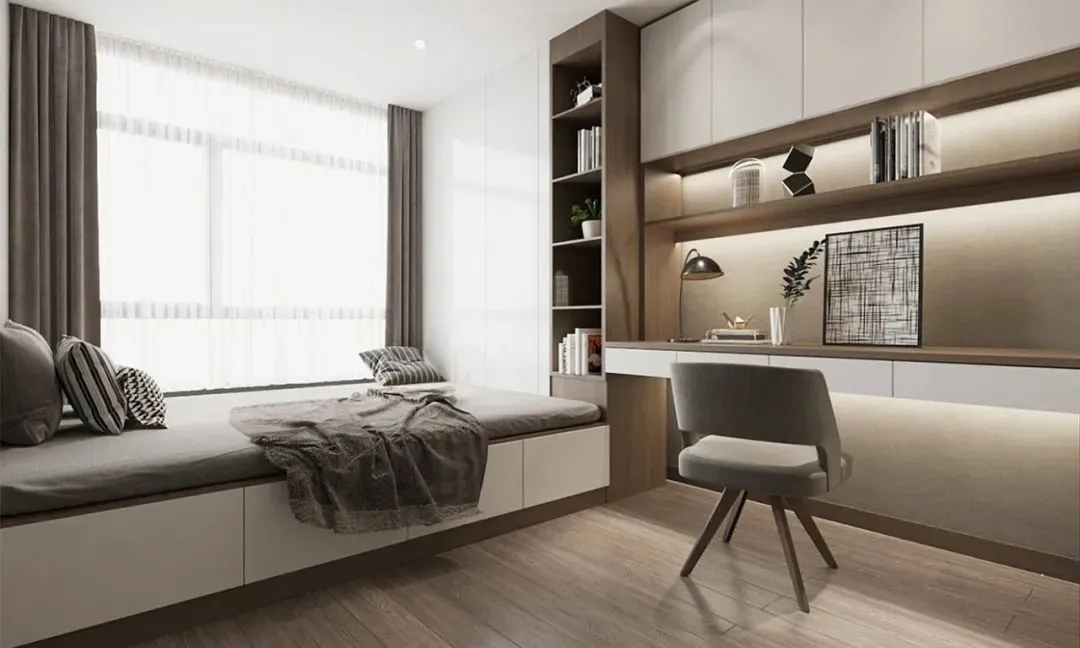
03
What are the tatami design forms?
Tatami + bookcase
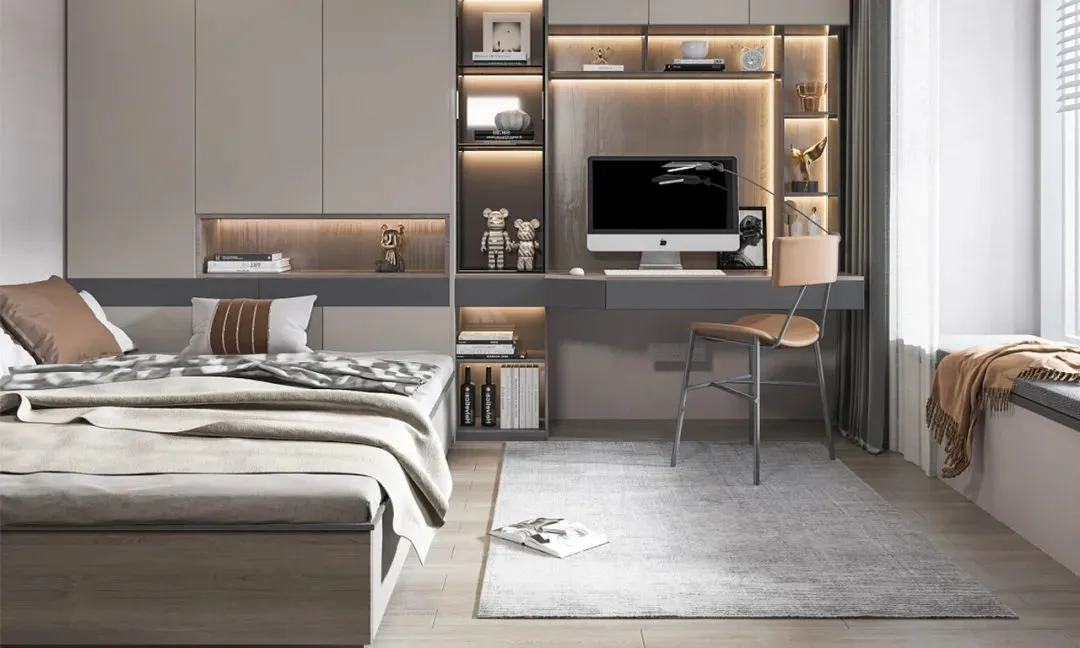
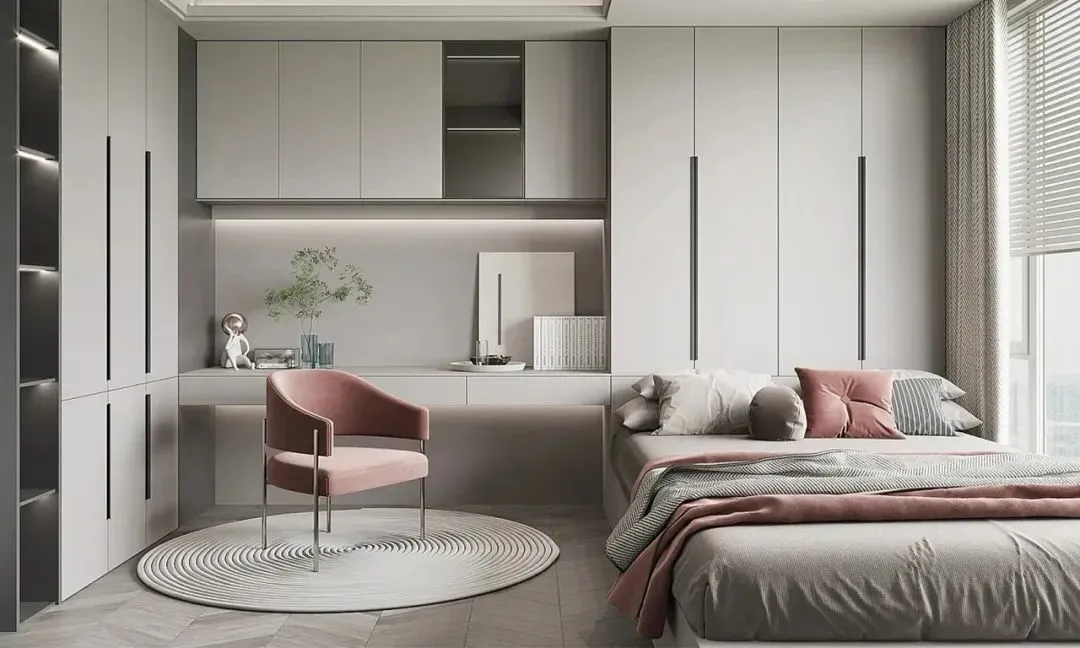
Tatami + bookshelf + wardrobe
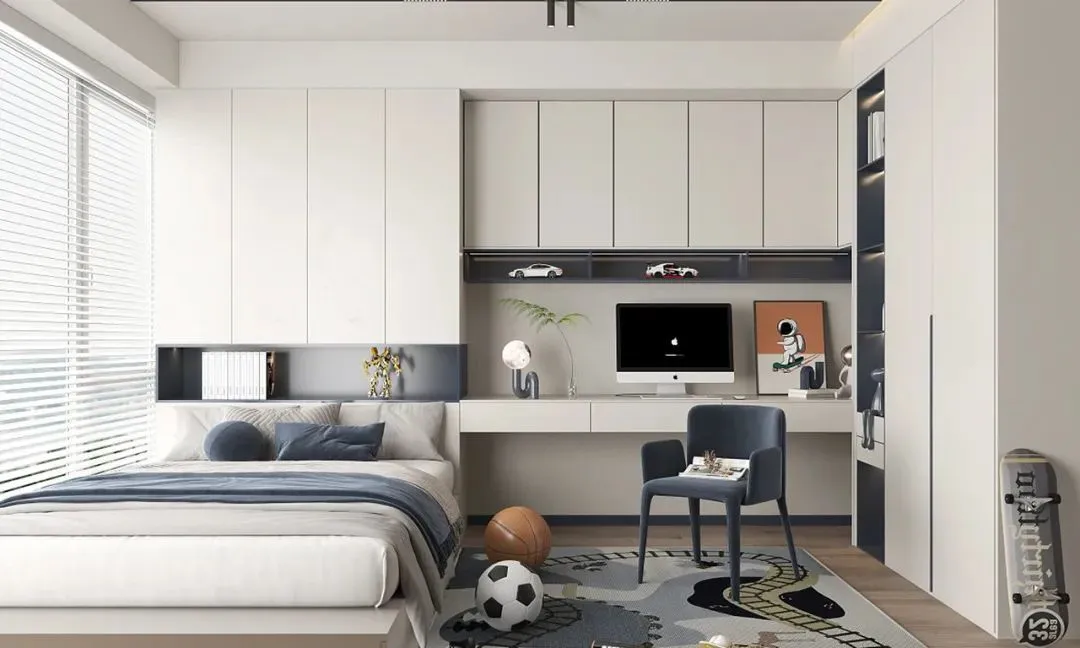
Tatami + children’s room
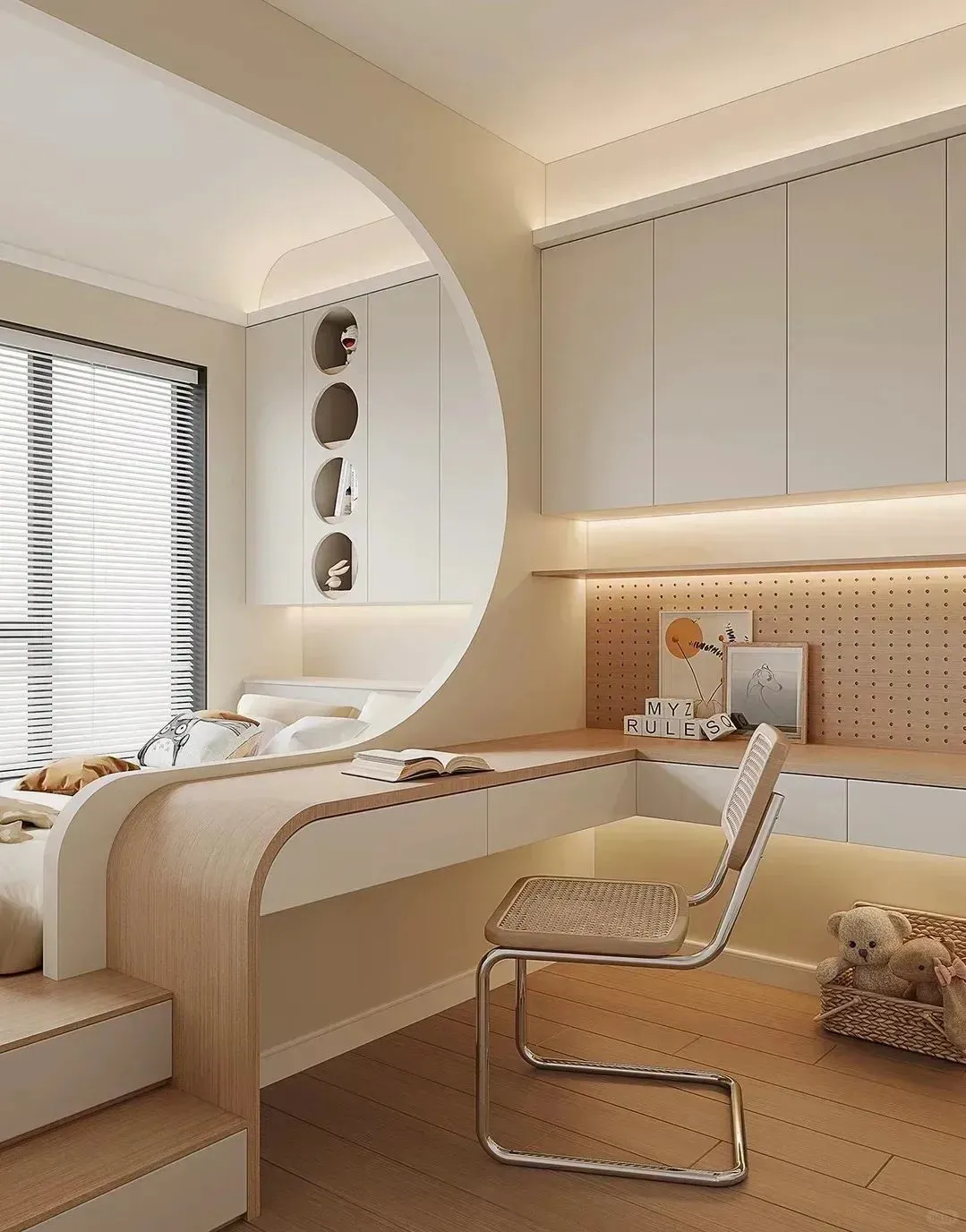
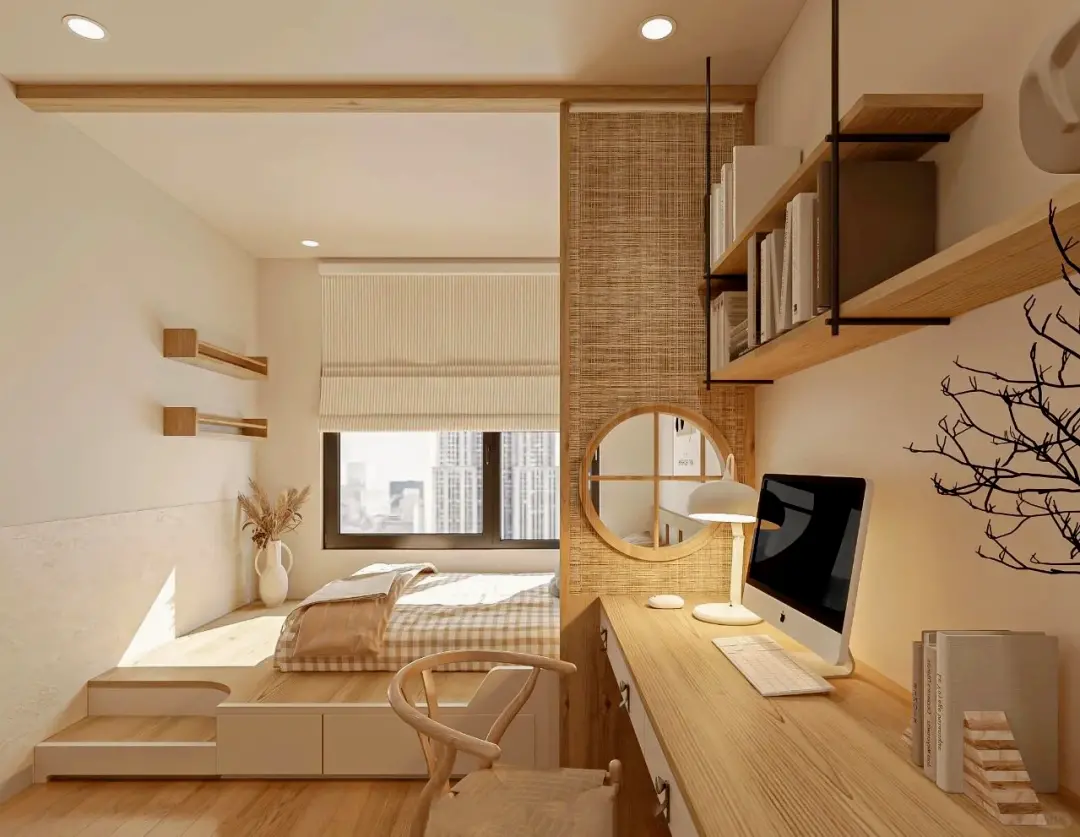
Tatami study room