
 By admin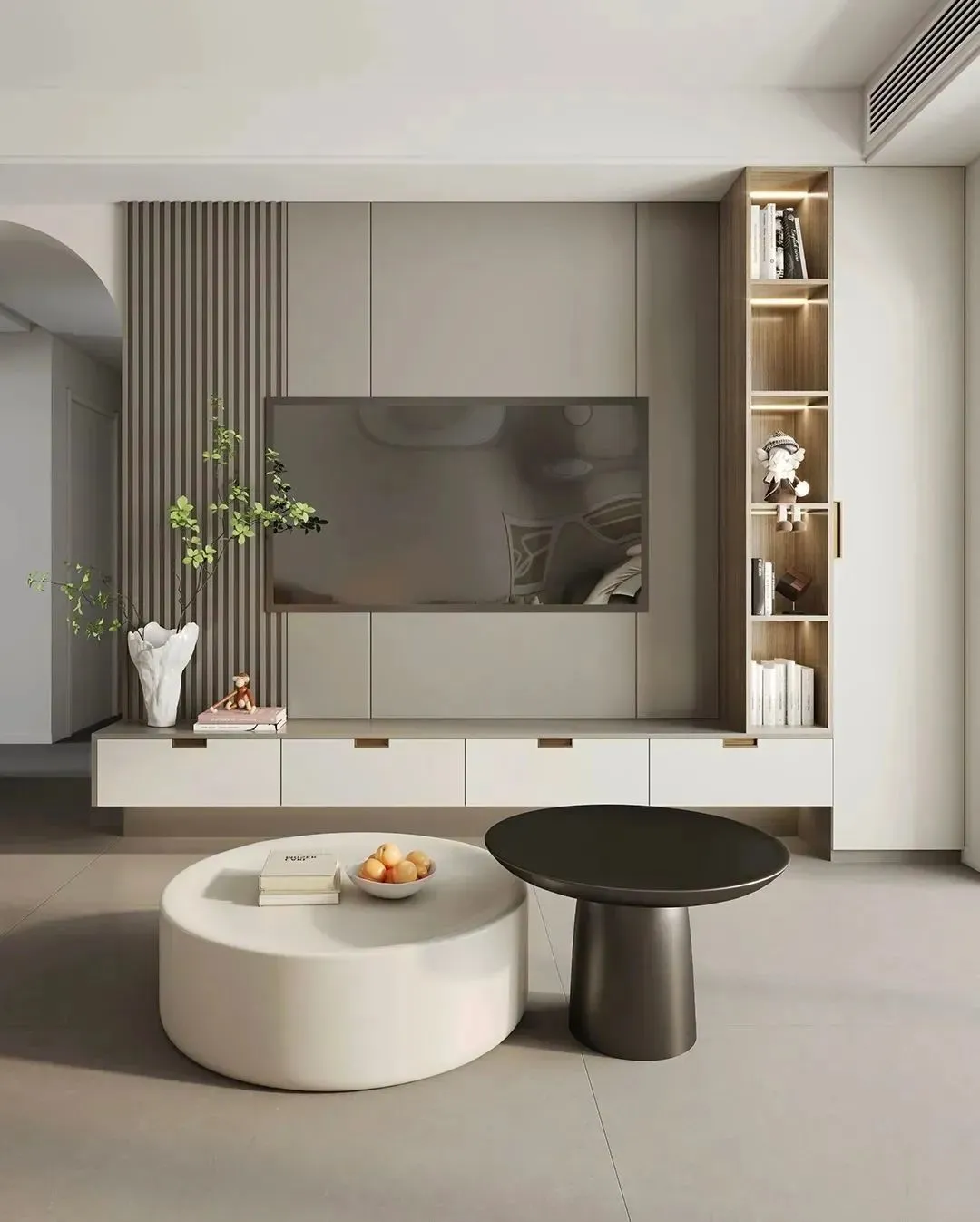
An ideal TV cabinet is not only a visual highlight in the living room, but also a powerful assistant to expand your home storage! So, how should the TV cabinet be laid out, so as to find a balance between practicality and beauty, which is comfortable to look at, and does not make the living room look messy?
In this article, we will introduce several different design forms of TV cabinet, and what you need to pay attention to when designing.

Design form of TV cabinet
Simple floor cabinet ▼
This form is relatively simple, and the compact cabinet is suitable for the apartment with insufficient depth and narrow width in the living room. In addition, if you don’t have much storage needs at home, or you plan to install a projection screen, you can also consider this.
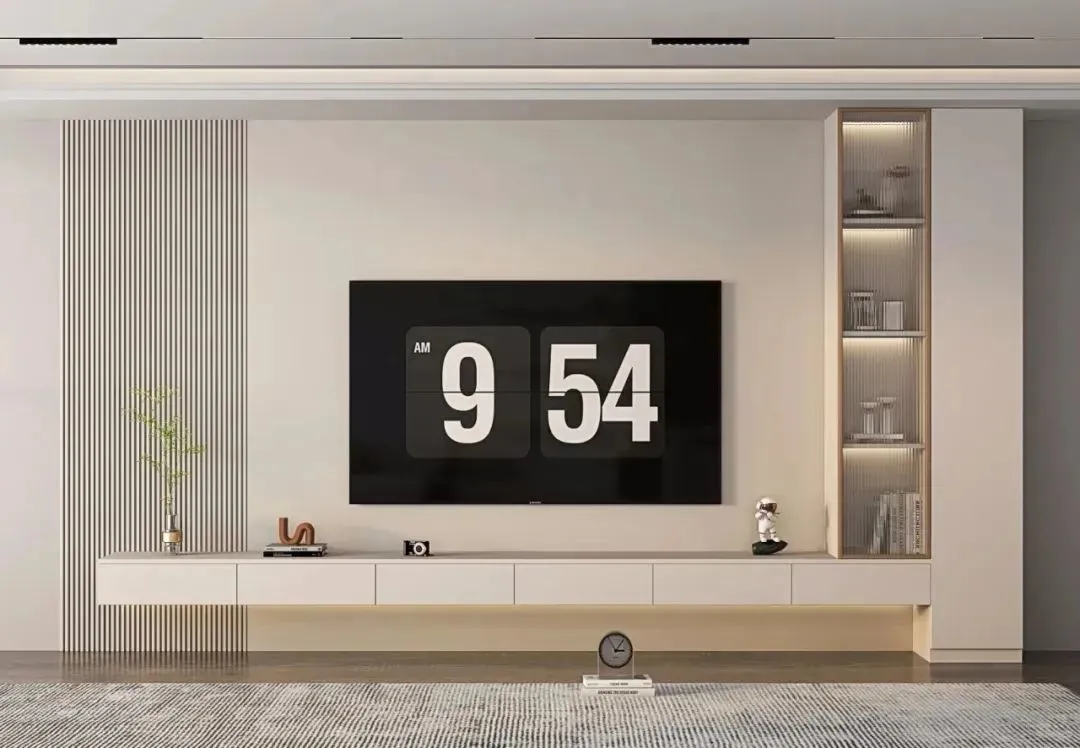
Families without TV can use the cabinet to display flowers, decorations or large art paintings, which can not only enhance the space style, but also enrich the vision, so there is no need for other decorations on the wall!
Suspended straight cabinet ▼
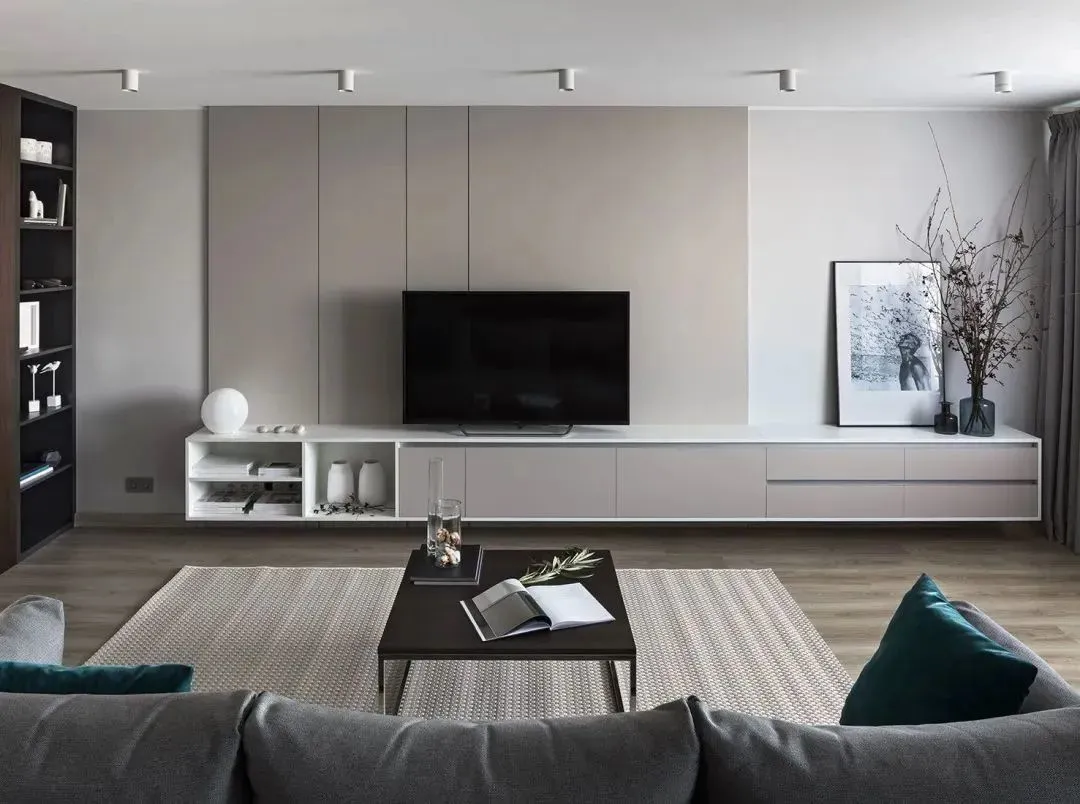
The design of the suspended TV cabinet gives people a light and simple feeling visually. Leave the bottom empty to facilitate the cleaning of the sweeping robot in and out. You can also install a light strip at the bottom to make the indoor light and shadow levels richer.
Like simple floor-to-ceiling cabinets, if you don’t have a TV at home and like to watch movies, you can use it with a curtain and put it away when not in use, which will not affect the appearance at all!
Minimalist custom cabinet ▼
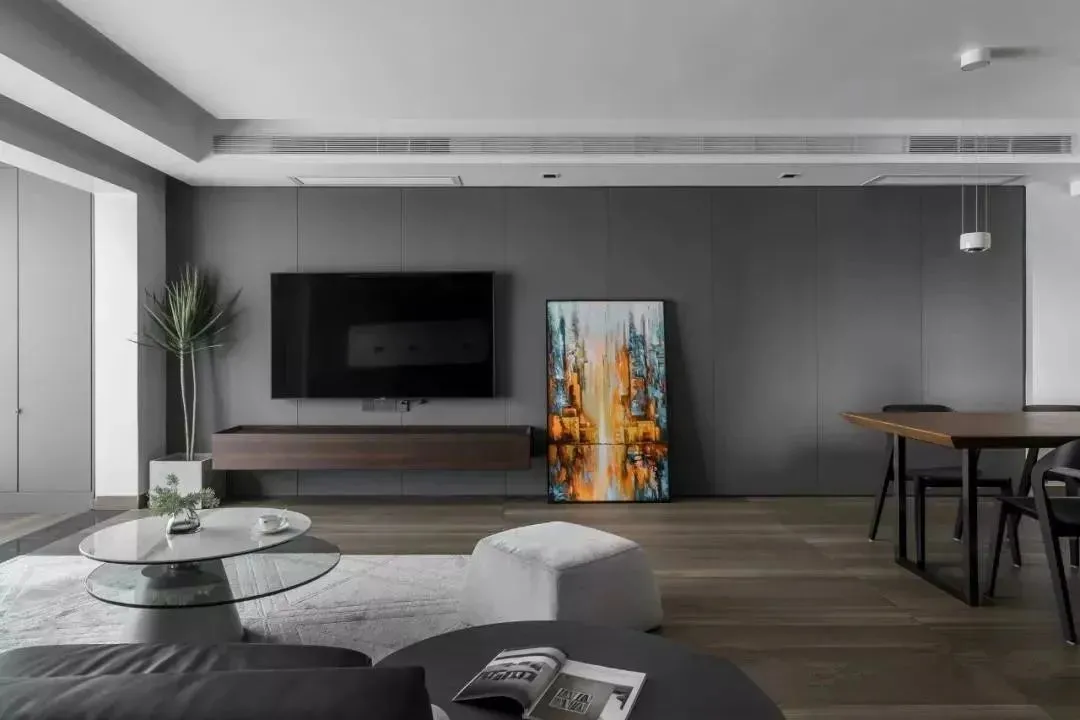
Minimalist TV cabinets often have many ingenious designs hidden, such as no handles, integration with the wall, embedding the TV in the cabinet, or hiding the TV with sliding doors, which minimizes the presence of the cabinet and enhances the space. The integrity and beauty of the space are simple and unified at first glance.
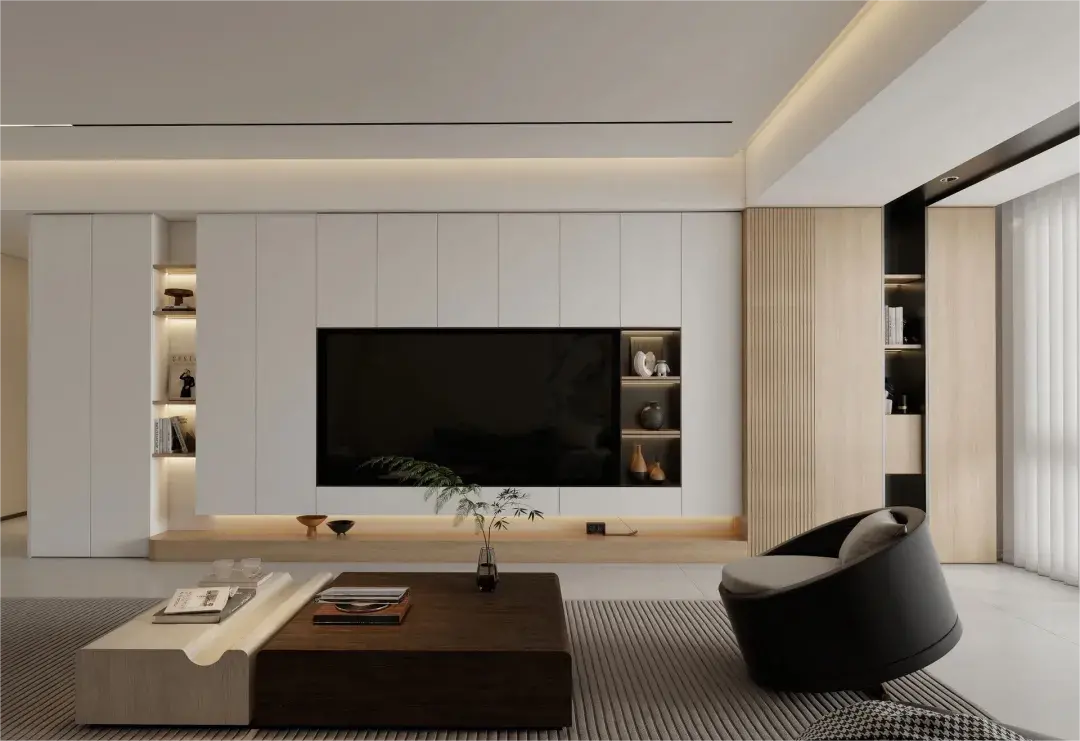
Multifunctional combined cabinet ▼
The multi-functional combined cabinet can change the storage form and improve the space utilization rate by adjusting the laminates and side panels. At the same time, according to the needs of different families, laminates, storage cabinets, etc. can be flexibly combined to meet various needs such as storage, display, and decoration.
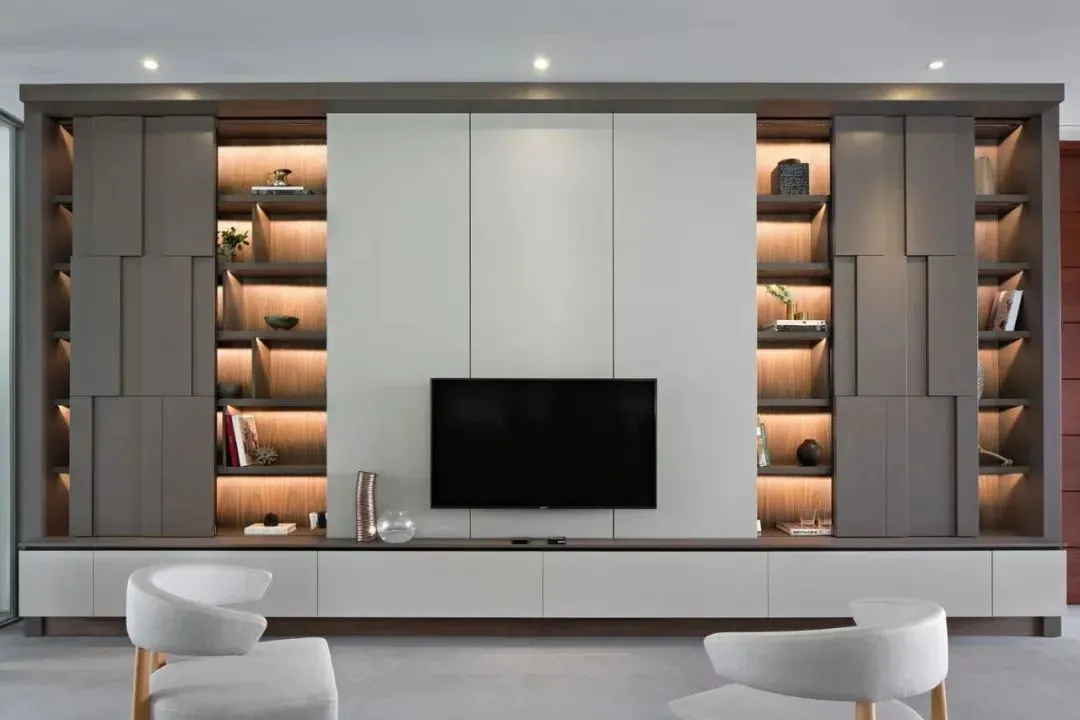
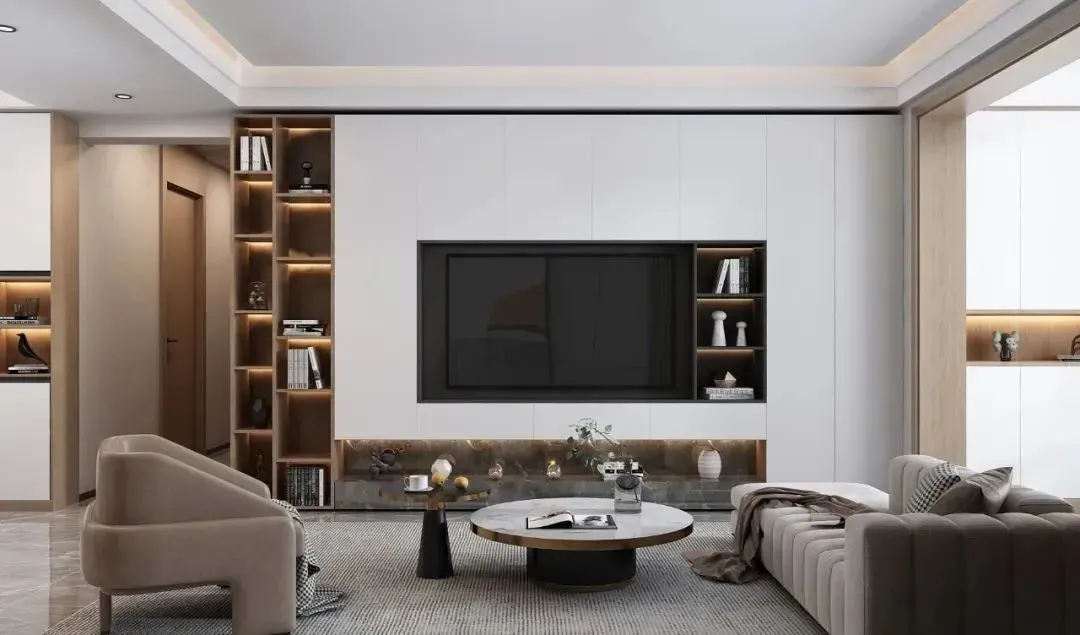
Vertical cabinet + floor cabinet + partition cabinet form a C-shape as a whole, and some areas are made open, which can not only alleviate the congestion caused by the cabinet, but also facilitate the display of books and accessories, and enhance the beauty of the entire background wall.
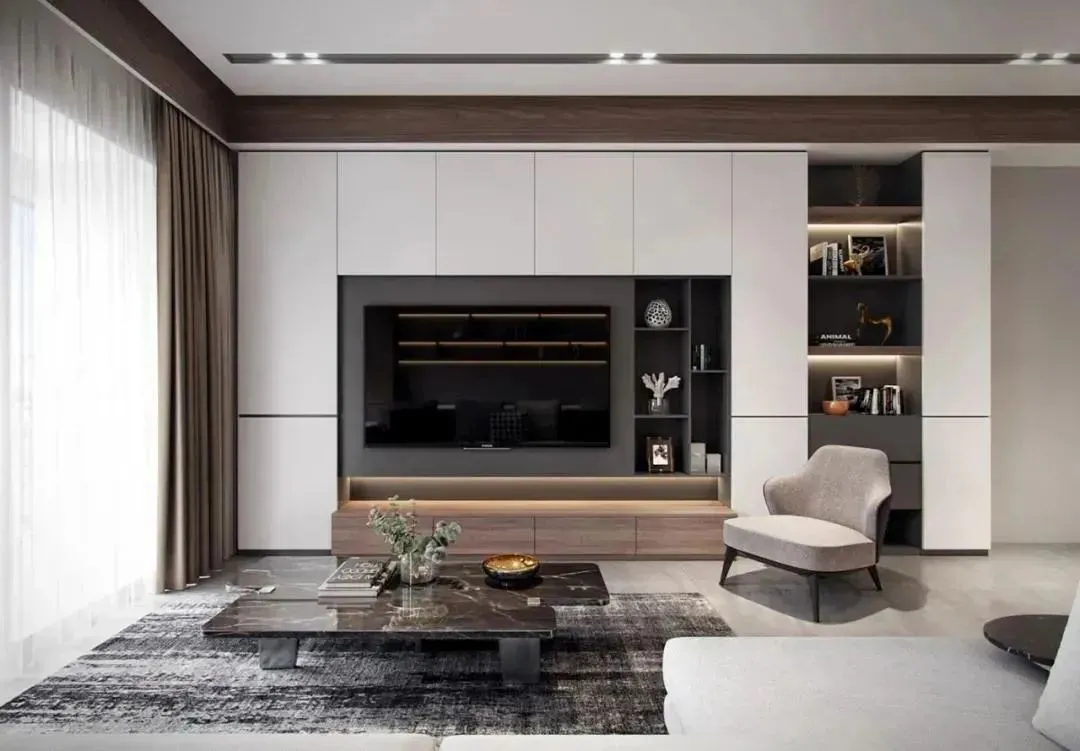
The zigzag-shaped structure has clear area division, and the semi-open design increases the storage and display space of the cabinet, ensures the viewing effect, and makes the overall layout symmetrical without losing liveliness.
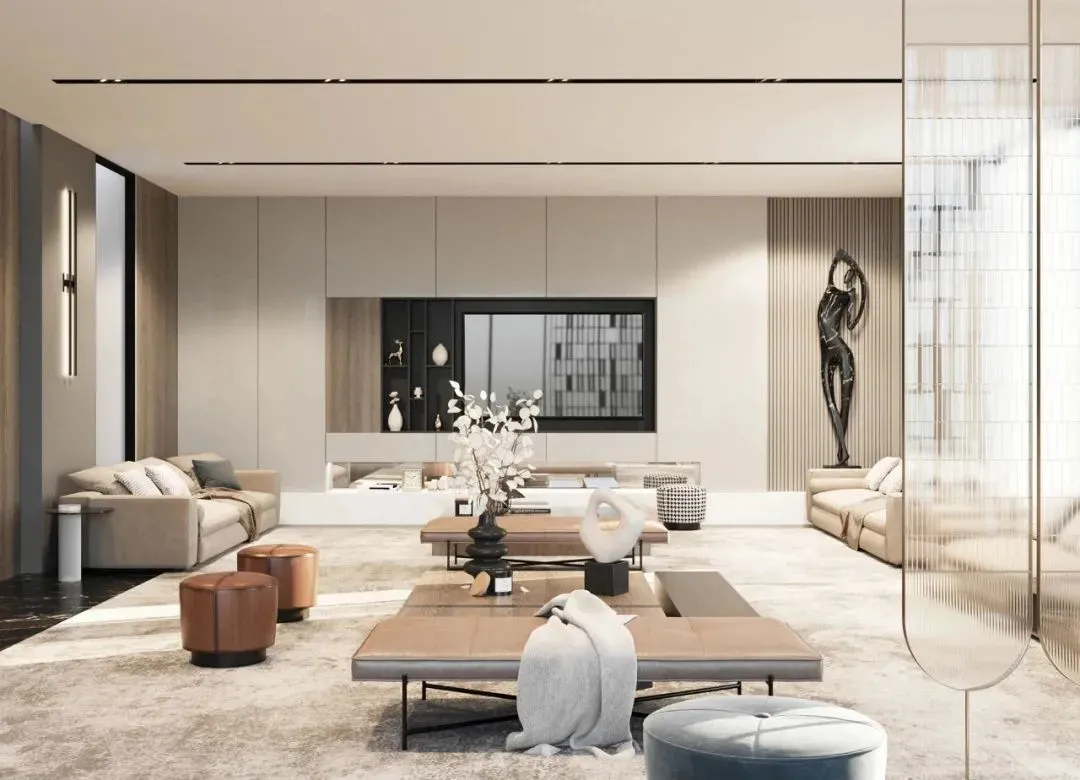
Customized storage form, some areas are open for display, the proportion of hidden and exposed is proper, and the appearance is refreshing and tidy, which not only adds extra storage space, but also creates a unique background wall shape.
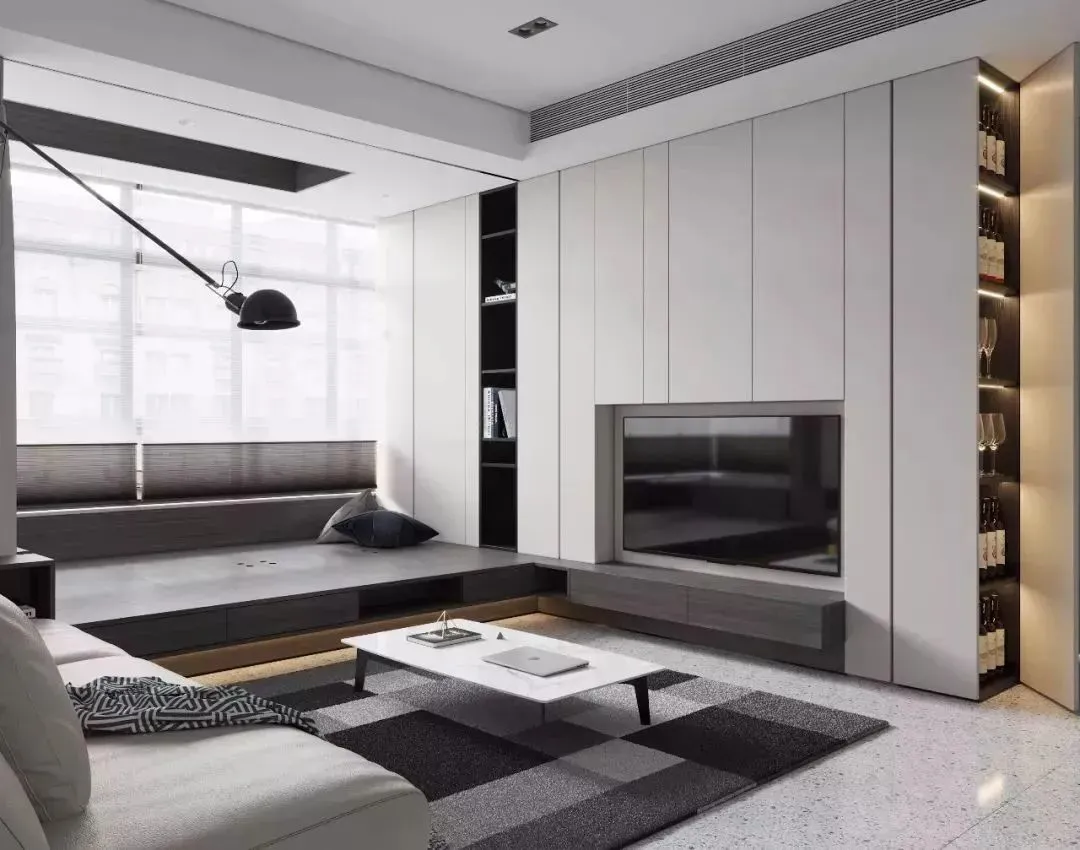
Integrated cabinet ▼
Integrating and customizing the cabinets on the TV background wall with the wall cabinets in other areas can extend the visual space horizontally and optimize the storage layout. Personalized customization not only pays attention to aesthetics, but also pays more attention to storage function to meet modern people’s expectations for customized space.
TV cabinet design precautions
Cabinet dimensions ▼
When shopping for a TV stand, the first thing to consider is the size and height.
There are usually three lengths of TV stands: 180 cm, 200 cm, 240 cm. It is recommended to choose a 180 cm long TV cabinet for small apartments; 200 cm optional for small and medium-sized apartments; If it is a large apartment or the living room is relatively long, it is recommended to choose 240 cm.
If the TV cabinet is used to hold the TV, the depth of about 40-60 cm is enough!
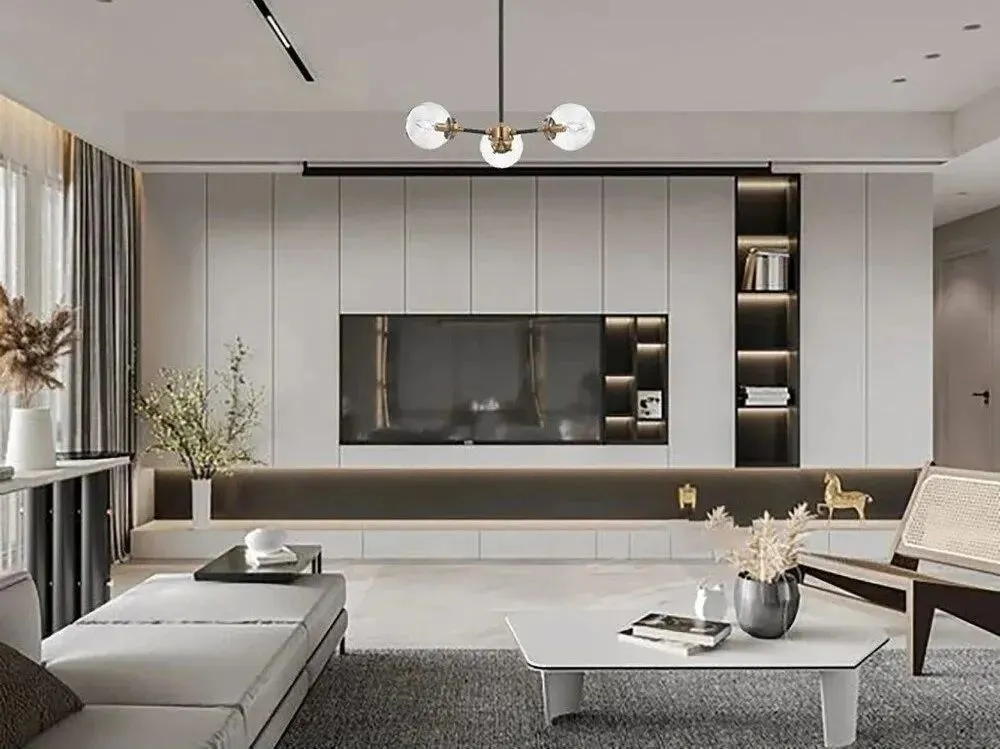
The height of the TV cabinet depends on the height of people’s sight. Generally, it is about 110 cm, which is a more comfortable choice for watching TV.
The placement distance of the TV cabinet is very important. Putting it too close not only affects viewing, but also may damage eyesight. Usually, it is most appropriate to keep it at about 200-300 cm.
If it is a wall-mounted TV, and you plan to make a custom TV cabinet on the whole wall, the length and width should be determined according to the size of the TV. It is recommended to leave a gap of about 10 cm around it to facilitate debugging and heat dissipation.
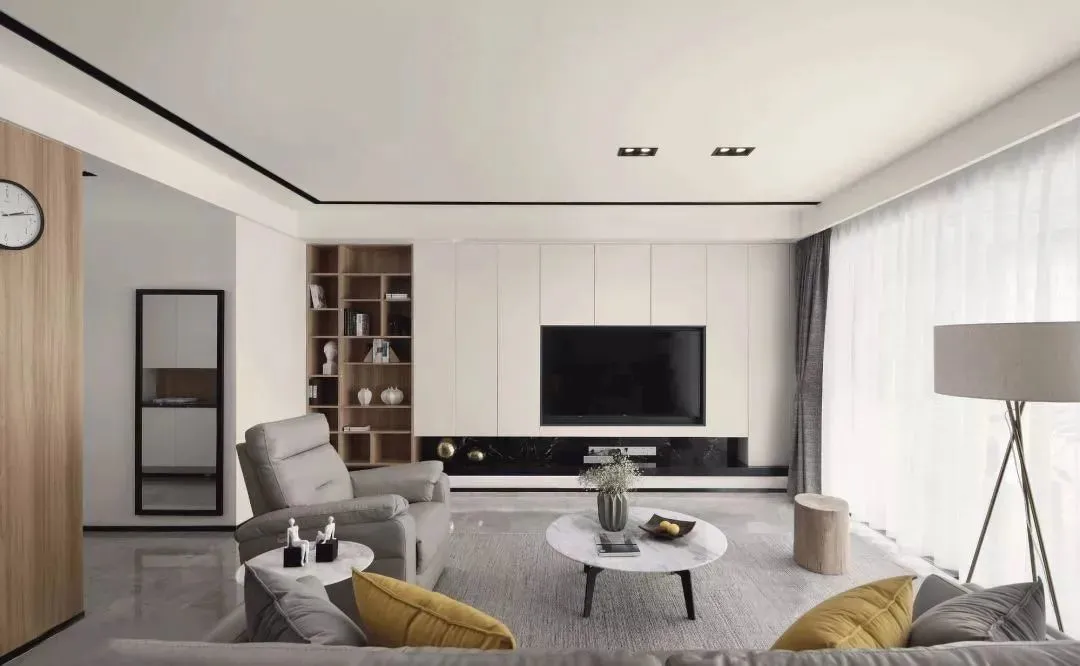
These TV cabinets above, whether in color matching or functional design, are hard to find fault.